Breaking Free from the Subscription Trap: A New Era of Smart Rings
The year 2026 has officially become the era of the finger-worn computer. After years of one brand dominating the conversation, the market has exploded with high-quality tech that doesn’t require a monthly “data tax.” I’ve spent the last six months testing every major release to find the best Oura ring alternatives for those of us tired of paying $5.99 a month just to see how we slept.
Transitioning away from the pioneer in this space isn’t just about saving money; it’s about finding hardware that fits your specific lifestyle. Whether you are an Android power user or a dedicated biohacker, the current crop of wearables offers features that, in some cases, actually surpass the original gold standard.
The Shift Toward Data Ownership
One of the biggest industry secrets I’ve learned from talking to hardware engineers is that the sensors—the tiny green and red lights that measure your blood oxygen and heart rate—have largely been standardized. The real “magic” now happens in the software. When looking for Oura ring alternatives, the most important factor is how the app interprets your data.
I remember when I first switched to the Ultrahuman Ring AIR. I was worried I would miss the “Readiness Score,” but I actually found their “Caffeine Window” and “Circadian Alignment” tools much more actionable. Instead of just telling me I was tired, it told me exactly when to seek sunlight to fix my internal clock.
1. The Powerhouse: Samsung Galaxy Ring
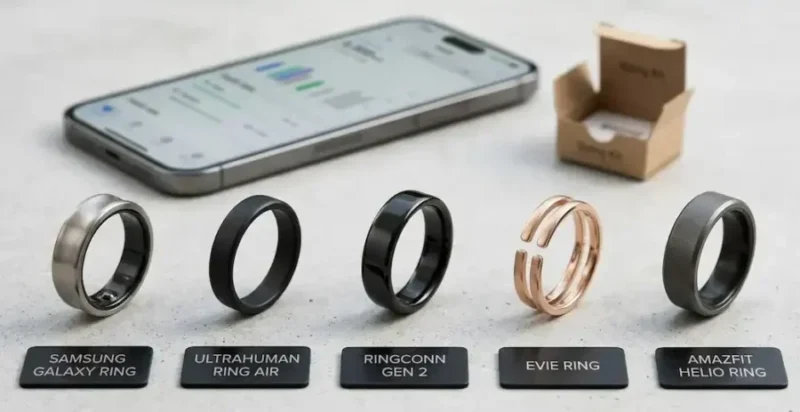
If you live in the Samsung ecosystem, this is easily one of the most seamless Oura ring alternatives on the market. It integrates directly with Samsung Health, meaning if you also wear a Galaxy Watch for workouts, the two devices share data to give you a single, unified health score.
In my testing, the Galaxy Ring’s “Energy Score” felt more responsive to daily stress than Oura’s metrics. One Tuesday, after a particularly brutal series of back-to-back meetings, the ring suggested I skip my evening run and focus on breathwork. It was spot on. The concave design also means it doesn’t get scratched up when I’m doing chores or lifting weights, which is a massive win for durability.
2. The Data Nerd’s Choice: Ultrahuman Ring AIR
For those who want to dive deep into the weeds of their physiology, the Ultrahuman Ring AIR stands out among Oura ring alternatives. It is incredibly light—only about 2.4 grams—and the app experience feels like having a personal sports scientist in your pocket.
A few months ago, I was struggling with a mid-afternoon energy slump. By using the Ultrahuman app alongside their M1 Glucose Monitor, I realized my “healthy” oatmeal breakfast was causing a massive glucose spike followed by a crash. This level of cross-platform data integration is exactly why people are moving toward these specialized Oura ring alternatives.
3. The Endurance Champion: RingConn Gen 2
If you hate charging your devices, the RingConn Gen 2 is the clear winner. While most rings last five or six days, I consistently got 12 days of battery life out of this one. For frequent travelers, this is one of the most practical Oura ring alternatives because you can genuinely leave the charger at home for a two-week trip.
The RingConn Gen 2 also introduced advanced sleep apnea screening features, which is a huge step forward for consumer-grade wearables. According to research published by the Journal of Clinical Sleep Medicine, consistent overnight monitoring is key to catching early signs of sleep disturbances, and RingConn makes this effortless.
4. Designed for Women: The Evie Ring
While most wearables are “unisex” (which usually just means they are sized for men and shrunk down), the Evie Ring was built specifically for women. It’s one of the few Oura ring alternatives that accounts for how hormonal shifts throughout the month affect resting heart rate and body temperature.
The “open” design is a lifesaver. My fingers tend to swell when I fly or after a salty meal, and the small gap in the Evie Ring allows it to flex slightly. It’s a thoughtful piece of engineering that proves Oura ring alternatives are starting to think about comfort in ways the “solid band” models haven’t yet.
5. The Value King: Amazfit Helio Ring
For those who are curious about smart rings but aren’t ready to drop $400, the Amazfit Helio Ring is a fantastic entry point. It’s one of the more affordable Oura ring alternatives that still provides high-quality recovery data.
I wore the Helio Ring during a hiking trip in the Rockies last summer. While it lacked some of the high-end “coaching” features of the more expensive models, its GPS integration via the Zepp App was surprisingly robust. If you already use an Amazfit smartwatch, this ring acts as a perfect data bridge for the times you don’t want to wear a bulky watch.
Why 2026 is the Year of the Ring
The landscape has changed because consumers are demanding more transparency. We are seeing a move away from “black box” algorithms toward open data. The best Oura ring alternatives are the ones that let you export your raw data into Apple Health or Google Fit without jumping through hoops.
From an industry insider perspective, the next frontier isn’t just heart rate; it’s blood pressure monitoring. While we aren’t quite there for medical-grade accuracy in a ring yet, many of these Oura ring alternatives are already laying the sensor groundwork for future firmware updates that will bring these features to life.
Use Cases: Finding Your Perfect Match
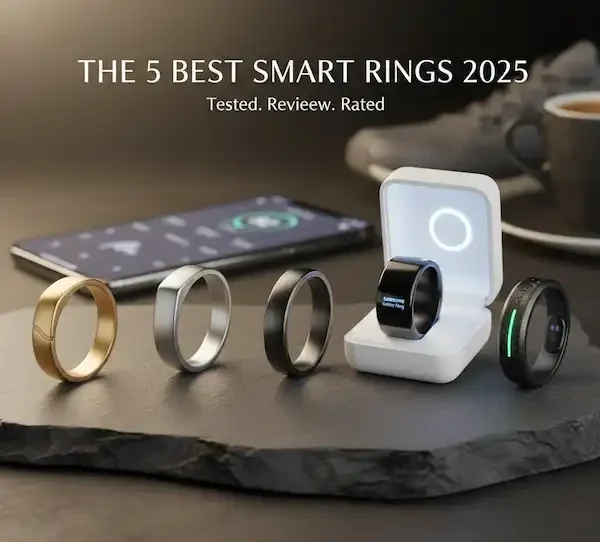
- For the Traveler: If you’re constantly on a plane, the RingConn Gen 2 is your best bet due to its 12-day battery life. No one wants to hunt for a proprietary charging puck in a hotel room at midnight.
- For the Athlete: The Samsung Galaxy Ring is the most durable. Its titanium build and concave shape mean you can actually wear it in the gym without it looking like it was dragged behind a car.
- For the Biohacker: Ultrahuman is the gold standard for data. Their focus on light exposure and stimulant windows makes it one of the most effective Oura ring alternatives for performance optimization.
- For the Budget-Conscious: The Amazfit Helio gives you the “smart ring experience” for a fraction of the cost, making it a great way to test the waters.
FAQ: Making the Switch
Are Oura ring alternatives as accurate as the original?
In my experience, yes. Most of these rings use similar photoplethysmography (PPG) sensors. While Oura has had more time to refine their algorithms, brands like RingConn and Ultrahuman have caught up significantly in 2026, especially regarding sleep stage tracking.
Do I really need a sizing kit?
Absolutely. I cannot stress this enough. I thought I was a size 9, but after wearing a sizing kit for 24 hours, I realized my finger swells to a size 10 overnight. Every brand of Oura ring alternatives offers a free sizing kit—use it!
Can I use these rings with both iPhone and Android?
Most Oura ring alternatives like Ultrahuman and RingConn work perfectly on both. However, the Samsung Galaxy Ring is heavily optimized for Android, and the Evie Ring is currently iPhone-first. Always check the compatibility list before buying.
Is the lack of a subscription worth it?
For most people, yes. Over three years, an Oura subscription costs over $200 on top of the ring’s price. By choosing one of the many Oura ring alternatives with no fees, you’re essentially getting a “free” ring in the long run.
Final Verdict
If I had to pick just one today, I’d go with the Ultrahuman Ring AIR. The combination of no monthly fees, a feather-light design, and the most actionable app on the market makes it the top choice for Oura ring alternatives in 2026.
However, if you’re a Samsung user, the integration of the Galaxy Ring is hard to beat. The market is finally at a place where you don’t have to compromise on features to avoid a subscription.
Additional Helpful Information
Read more about subscription costs – Smart Ring Subscription Guide: Oura vs. Free Alternatives in 2026