Smart Rings: Your Discreet Health Monitor
I used to be the guy who’d wake up feeling like a truck hit him, staring at the ceiling and wondering why “eight hours of sleep” felt more like twenty minutes of light napping. It wasn’t until I started diving into the world of smart rings—specifically those tracking blood oxygen (SpO2)—that I realized my body was fighting a silent battle every night. Curious about whether blood oxygen monitor smart rings on your finger can actually tell you anything meaningful about your health. After living with several of these devices on both iPhone and Android, I can tell you: they aren’t magic, but they are incredibly revealing.
Why Blood Oxygen Even Matters (The “Aha!” Moment)
Most of us think of oxygen as something we just… do. But SpO2 is a measure of how much oxygen your red blood cells are carrying. For a healthy person, that number should stay between 95% and 100%. Blood oxygen monitor smart rings can help you watch this.
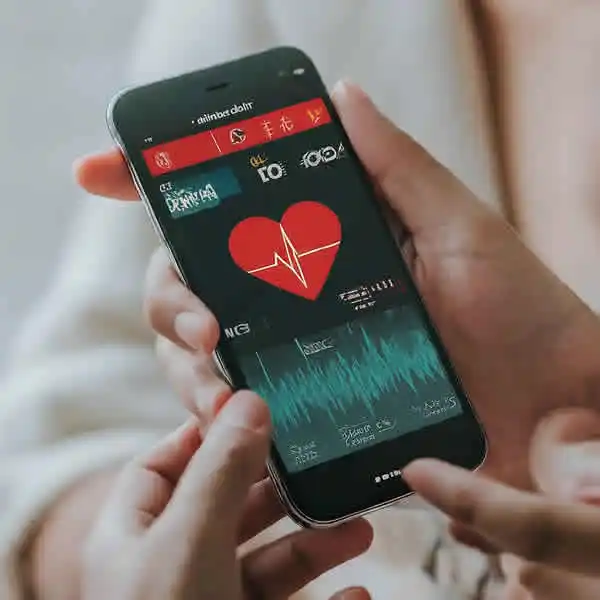
My “aha!” moment came during a trip to the Colorado Rockies. I was wearing an Oura Ring at the time. I felt fine during the day, but my “Breathing Regularity” chart in the app looked like a jagged mountain range. My blood oxygen monitor smart ring showed me my oxygen levels were dipping into the high 80s while I slept. That explained the morning headaches and the sluggishness. Without that data point, I would have just blamed the altitude and moved on. Instead, I learned how my body reacts to thin air—and more importantly, how it reacts when I’m getting sick or over-trained.
The Heavy Hitters: Which Rings Actually Work?
I’ve tested the big names across both mobile ecosystems. Here is the “no-fluff” breakdown of how blood oxygen monitor smart rings handle blood oxygen.
1. The Oura Ring (Gen 4 & 3)
Oura is the gold standard for a reason. It uses red and infrared LEDs (the same tech found in medical pulse oximeters) to measure your blood oxygen monitor smart ring while you sleep.
- The Experience: It doesn’t give you a live “on-demand” reading easily; it focuses on your overnight average. It presents the data through a “Breathing Regularity” metric.
- Compatibility: Excellent on both iPhone and Android.
- Personal Note: I found Oura’s data to be the most consistent. If it says I had a “fair” night of breathing, I usually feel it the next day. The downside? That $5.99/month subscription feels like a “health tax” after already paying $350 for the ring.
- External Resource: You can see how Oura’s SpO2 sensing is designed to detect disturbances like sleep apnea on their official support page.
2. The Samsung Galaxy Ring
As a long-time Android user, I was hyped for this. It’s incredibly light—honestly, you forget it’s there.
- The Experience: It integrates perfectly with Samsung Health. The blood oxygen monitor smart ring tracks SpO2 overnight and provides an “Energy Score.”
- Compatibility: Android Only. Sorry, iPhone users, you’re locked out of this one. Even on Android, you get the best features if you’re using a Samsung Galaxy phone.
- Personal Note: The “snore tracking” (which uses your phone’s mic in tandem with the ring’s SpO2 sensor) is a brutal reality check. Seeing a drop in oxygen at the exact same time the app records you snoring like a chainsaw is a powerful motivator to change your sleep position.
3. Ultrahuman Ring AIR
If you hate subscriptions, this is your winner.
- The Experience: The blood oxygen monitor smart ring gives you a “Circadian Phase” alignment and tracks SpO2 without any monthly fees.
- Compatibility: Great on both iOS and Android.
- Personal Note: The Ultrahuman app is a bit “data-heavy.” It feels like looking at a cockpit. It’s great if you’re a biohacker, but it might be overkill if you just want to know if you’re breathing okay.
4. RingConn Gen 2
This is the underdog that surprised me. It has a massive battery life (I got about 10 days out of it).
- The Experience: It offers 24/7 monitoring, including SpO2.
- Personal Note: I wore this alongside a medical-grade pulse oximeter for a few nights. While the ring was usually 1-2% off the medical device, the trends were identical. If the medical device saw a dip, the RingConn saw it too. For a consumer wearable, that’s all you really need.
How the Tech Actually Works (Simplified)
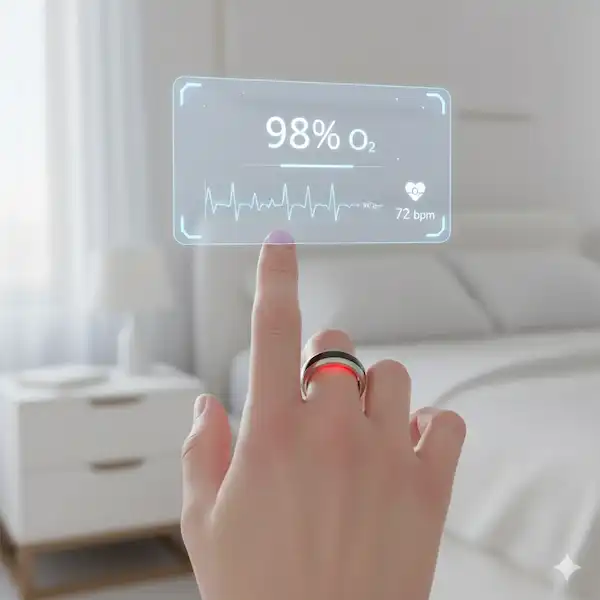
Your blood oxygen monitor smart ring isn’t just a piece of metal. It contains a PPG (Photoplethysmography) sensor.
- Red & Infrared Light: The ring shines these lights into the capillaries in your finger.
- Absorption: Oxygenated blood absorbs more infrared light; deoxygenated blood absorbs more red light.
- The Calculation: The sensors measure what reflects back and calculate your SpO2 percentage.
The reason blood oxygen monitor smart rings are often more accurate than watches is proximity. A watch sits on the “thin” skin of your wrist, but a ring sits right against the rich capillary beds of your finger. It’s the same reason a doctor clips a sensor to your finger, not your wrist. Research published via NIH has shown that ring-style oximeters can reach clinical-grade accuracy under the right conditions.
The “Reality Check”, What These Rings Won’t Do
I’ve learned the hard way that you can’t treat these as medical devices.
- The Movement Issue: If you’re a restless sleeper (like me), you’ll get “gaps” in your data. If the ring moves or the sensor isn’t flush against your skin, it can’t get a reading.
- The “False Alarm”: I once woke up to a 90% oxygen alert. I panicked, thinking I was ill. Turns out, I had just been sleeping on my hand, restricting blood flow to that finger. Don’t let the data give you “health anxiety.” Look at the weekly trends, not the one-off blips.
- Tattoos and Skin Tone: If you have a tattoo on your finger, the ink can block the light sensors. Similarly, very dark skin tones can sometimes struggle with certain green-light sensors, though most SpO2 sensors use red/infrared which is generally more reliable across skin tones.
Which One Should You Buy? (The iPhone vs. Android Verdict)
For iPhone Users: Go with the Oura Ring 4. It’s the most polished experience on iOS. If you hate subscriptions, the Ultrahuman Ring AIR is a very close second. Both sync beautifully with Apple Health.
For Android Users: If you have a Samsung phone, the Galaxy Ring is a no-brainer for the ecosystem integration. If you use a Pixel or OnePlus, I’d actually recommend the RingConn Gen 2 or Oura. They offer the most stable apps for the “open” Android environment.
Additional Thoughts from a Smart Ring Wearable Addict
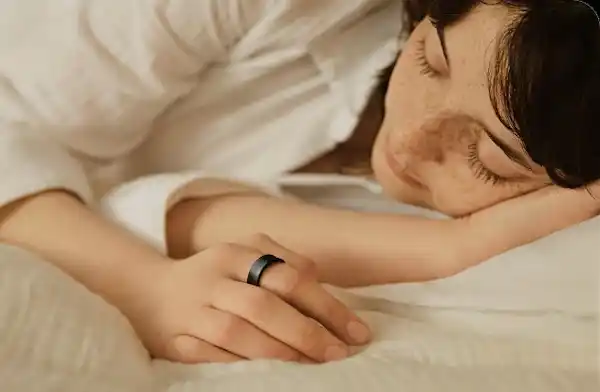
Monitoring my blood oxygen monitor smart ring didn’t “cure” my sleep issues, but it gave me a map. I learned that having a glass of wine before bed dropped my overnight oxygen by 3%. I learned that sleeping on my side kept my levels higher than sleeping on my back.
These rings are about awareness. They turn the “black box” of sleep into something you can actually see. Just remember to take the data with a grain of salt—and maybe a bit of humor when it tells you that you were “restless” because you were actually up at 3 AM raiding the fridge for leftover pizza.
FAQ
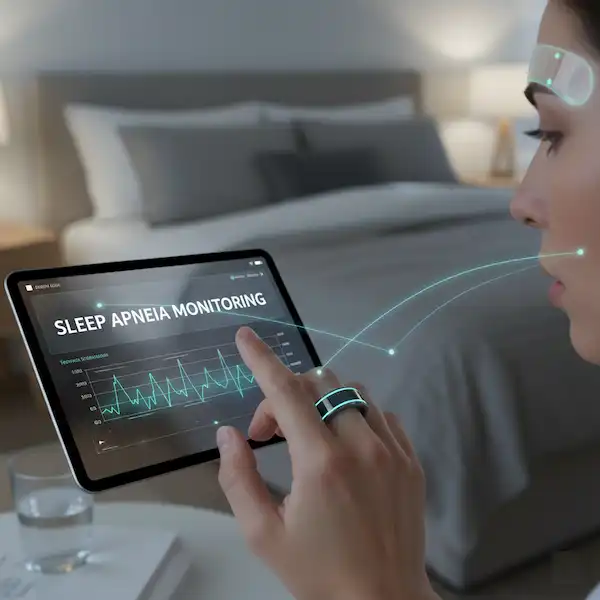
Q: Can a smart ring detect Sleep Apnea? A: Legally, they cannot “diagnose” it. However, they can show “Breathing Regularity” disturbances and oxygen drops that are classic signs of apnea. If your ring consistently shows your SpO2 dipping below 90% at night, take that data to your doctor. It’s a great conversation starter for a real sleep study.
Q: Does the battery life suffer if I keep SpO2 tracking on? A: Yes. Red LEDs use more power than the green ones used for heart rate. In my experience, turning on continuous or overnight SpO2 tracking knocks about 1-2 days off the total battery life of the ring.
Q: Is it okay to wear the ring on any finger? A: Most manufacturers recommend the index, middle, or ring finger. Personally, I find the index finger gives the most consistent SpO2 readings because the flesh is firmer, ensuring the sensors stay in contact with the skin.
Q: Can I use these for sports or “Live” oxygen tracking? A: Not really. Because of the way SpO2 is measured, you need to be relatively still. If you’re running or lifting weights, the “noise” from the movement makes it nearly impossible for the ring to get an accurate oxygen reading. They are best used for resting or sleep data.
Q: Will it work if I have nail polish or fake nails? A: Unlike the clip-on oximeters at the doctor’s office (which shine light through the nail), smart rings shine light into the bottom (palm side) of your finger. So, your manicure won’t affect the reading at all!
Q: Are there any FDA-cleared smart rings? A: Most consumer rings (Oura, Samsung) are “wellness devices,” not FDA-cleared medical devices. However, companies like Movano (with the Evie Ring) have been working toward clinical-grade clearances. Always check the current status, as this changes quickly. Check the FDA database if you need medical-grade assurance.
Q: How tight should the ring be? A: It should be snug but not “sausage-finger” tight. If you can rotate the ring easily, it’s too loose for SpO2. It should stay in place when you shake your hand, but you should be able to get it off with a bit of soap and water if your fingers swell.
Additional helpful information:
- In addition to monitoring your oxygen levels, a smart ring can also monitor your sleep patterns – How a Smart Ring Can Improve Your Sleep?
- Track and monitor your heart rate – Smart Ring Heart Monitor Apps – Track Your Heart Rate
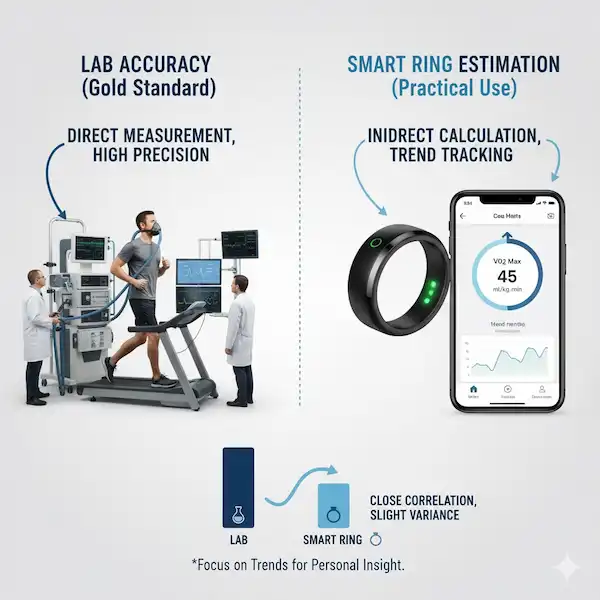
- More details about smart ring VO2 monitoring – Smart Ring VO2 Max Accuracy