The Reality of Living with a Tiny Computer on Your Finger
Let’s be real for a second: the first time you slide a smart ring onto your finger, it feels like you’re living in a sci-fi movie. But after the initial “cool factor” wears off, you’re left with the day-to-day reality of wearing a piece of titanium that’s constantly judging your sleep and whispering data to your phone. Continue reading to learn about how to choose the best smart ring.
I’ve spent the last few years cycling through almost every major player in the market—from the Oura Ring 4 to the newer, flashy Samsung Galaxy Ring and the sleeper hits like RingConn. I’ve worn them to weddings, I’ve scratched them against gym bars, and I’ve cursed at them when they died mid-sleep. If you’re trying to figure out which one belongs on your hand, you don’t need a spreadsheet of specs. You need to know what it’s actually like to live with these things.
The Ecosystem Trap: Android vs. iPhone
Before we even talk about sensors or battery life, we have to talk about the “walled garden.” This is the part of the industry that manufacturers bury in the fine print. This is an important consideration to Choose the Best Smart Ring. You don’t want to buy a new phone too.
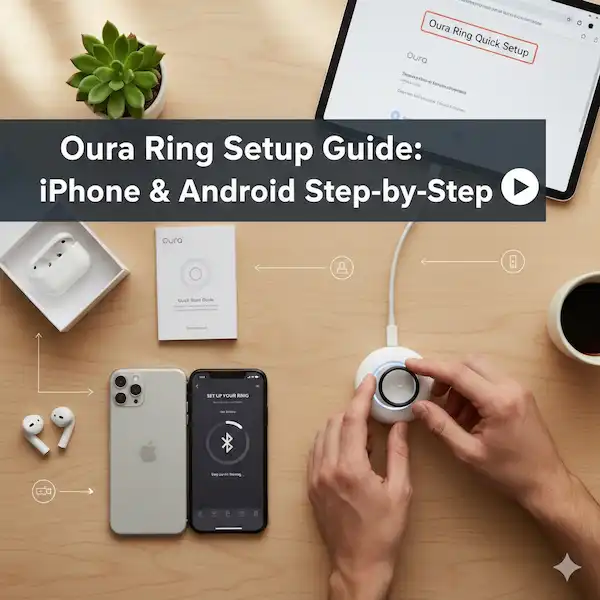
The iPhone Experience If you’re on an iPhone, the Oura Ring 4 is effectively the gold standard. It syncs with Apple Health flawlessly. I’ve found that the way Oura interprets data—giving you a “Readiness Score”—feels much more “Apple-like” than its competitors. However, stay away from the Samsung Galaxy Ring if you’re an iOS user. It simply won’t work. I’ve seen people buy them thinking they could find a workaround, but Samsung has locked that gate tight.
The Android World Android users actually have it better right now. The Samsung Galaxy Ring is a dream if you’re already in the Samsung ecosystem (using a Galaxy watch or phone). The “Energy Score” is surprisingly accurate. But here’s an insider tip: if you use a Google Pixel or a OnePlus, you aren’t forced into the Samsung ecosystem. The Ultrahuman Ring Air and RingConn Gen 2 are incredibly friendly to all Android builds, often offering more “raw” data for those of us who like to nerd out over heart rate variability (HRV) graphs.
Sizing: The Part Everyone Messes Up
I cannot stress this enough: To Choose the Best Smart Ring, you must be sure you have the right size, do not skip the sizing kit. I once thought I knew my ring size—a standard 10. When my first smart ring arrived, it was so tight by midday that my finger turned a worrying shade of purple.
Smart rings are thicker than your wedding band because they have to house batteries and sensors. Your fingers swell at night and when you’re warm. Insider Knowledge: Wear the plastic sizing ring for at least 24 hours. Sleep in it. Go for a run in it. If it’s uncomfortable when you’re doing dishes, the real ring will be a nightmare. You want a snug fit on the index or middle finger for the best sensor accuracy, but it shouldn’t require WD-40 to get off.
The Big Three: Oura, Samsung, and the “Indies”
1. Oura Ring 4: The Polished Veteran
Oura has been doing this longer than anyone, and it shows in their software. Their app doesn’t just give you numbers; it gives you context. When I had a late-night pizza and a beer, Oura’s “Body Temperature” sensor caught the spike before I even felt sluggish the next day.
- The Catch: The subscription. It’s about $6 a month. I hate subscriptions as much as the next person, but Oura’s data science is currently the most “validated” in the industry. They’ve participated in clinical studies for illness detection, which gives me a bit more peace of mind when the ring tells me I’m getting sick.
2. Samsung Galaxy Ring: The New Contender
Samsung’s entry into the market was the “shot heard ’round the world” for the industry. It’s incredibly light—sometimes I forget it’s there. The concave design is a stroke of genius because it hides scratches better than the flat surfaces of other rings.
- Pro Tip: If you use a Samsung phone, the ring and the phone work together to save battery. They “hand off” tasks to each other. It’s the kind of integration that makes the high price tag feel a bit more justified. Plus, there’s no monthly fee—a huge win for those of us with subscription fatigue.
3. RingConn Gen 2: The Battery King
If you’re like me and forget to charge your devices until they’re dead, RingConn is the one. I’ve consistently gotten 10 to 12 days out of a single charge. Most other rings tap out at day five. Their charging case is also the best in the business—it’s like an AirPods case for your ring. You can check out their comparison data to see how they stack up against the big names, but from my experience, it’s the most “frictionless” ring for a busy lifestyle.
Durability: Let’s Talk About Scratches
Here is the truth: your ring will get scratched. I don’t care if it’s “aerospace-grade titanium.” If you lift weights, garden, or even just grab metal door handles, you’re going to see silver peeking through that black or gold finish within a month.
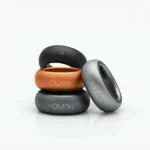
In my time testing these, the Ultrahuman Ring Air in the “Raw Titanium” finish held up the best because scratches just blended into the natural texture. If you go for a “Stealth” or “Matte Black” finish on any brand, be prepared for it to look “well-loved” very quickly. I’ve started wearing a silicone “workout sleeve” over my ring when I’m at the gym—it looks dorky, but it saves the $400 investment.
Sleep Tracking: The Real Reason We’re Here
The main reason anyone buys a smart ring instead of a watch is sleep. I can’t stand sleeping with a bulky Apple Watch or Garmin. A ring is invisible. Be sure to Choose the Best Smart Ring for your sleep tracking.
The accuracy of sleep stages (REM, Deep, Light) is notoriously hard for wearables to get 100% right, but rings are better than watches because the skin on your finger is thinner and the blood vessels are closer to the surface. I’ve found that the Oura and RingConn are the most sensitive to “tossing and turning.” When I have a rough night, the data usually matches my “ugh” feeling in the morning.
The Hidden Costs and Insider Secrets
- The Replacement Cycle: Most of these rings use tiny Lithium-ion batteries. After about 2-3 years, that battery is going to degrade. Because the rings are sealed for waterproofing, the battery isn’t replaceable. You aren’t buying a “forever” piece of jewelry; you’re buying a 3-year tech product.
- Privacy Matters: Your health data is valuable. Before you buy, look at where the data is stored. Companies like Oura and Samsung have more robust security infrastructures than some of the $50 “no-name” rings you find on budget sites. Don’t trade your biometrics for a bargain.
- Water Resistance: Most are rated for 50m to 100m. I’ve swam in the ocean with mine, showered daily, and washed dishes. The only thing to watch out for? Hot tubs. The high heat can occasionally mess with the seals.
Is It Actually Worth It?
If you’re an athlete training for a marathon, a smart ring probably isn’t enough. You need the GPS and the real-time screen of a watch. But if you’re someone who wants to understand why you’re tired, track your steps without looking like a “tech bro,” and get a nudge when your stress levels are peaking, a ring is perfect. Choose the Best Smart Ring for your needs.
My personal favorite? I keep coming back to the Oura Ring 4 for the app experience, but I keep my RingConn Gen 2 in the drawer for when I’m traveling and don’t want to carry a charger. An important consideration to Choose the Best Smart Ring.
Choosing Your Ring: The Quick Cheat Sheet
- The “I want the best data” choice: Oura Ring 4.
- The “I hate subscriptions” choice: Samsung Galaxy Ring (if on Android) or RingConn Gen 2.
- The “I have sensitive skin” choice: Ultrahuman Ring Air (very hypoallergenic materials).
- The “I’m on a budget” choice: Amazfit Helio Ring. It’s basic, but it gets the job done for half the price.
At the end of the day, Choose the Best Smart Ring is the one you actually keep on your finger. If it’s too bulky, too ugly, or too annoying to charge, it’ll end up in your bedside drawer within a month. Take your time, get the sizing right, and don’t be afraid to return a ring if the “vibe” isn’t right. After all, you’re the one who has to wear it 24/7.
FAQ: Everything I Wish I Knew Sooner
Q: Can I wear it on any finger? Most brands recommend the index finger for the best “signal,” but the middle finger works too. I wear mine on my non-dominant hand to minimize scratches when I’m using tools or opening doors.
Q: Does it track my workouts? It’s okay for “steady state” stuff like walking or cycling. It’s terrible for HIIT or weightlifting because when you grip something, your finger flattens, and the sensors lose contact. For those days, I still strap on my old chest strap monitor.
Q: Can I pay for things with it? Currently, most “health” rings (Oura, Samsung) do not have NFC payments. There are specialized rings like McLear for that, but you usually sacrifice the health sensors. We aren’t quite at the “one ring to rule them all” stage yet.
Q: Is the radiation safe? The Bluetooth LE (Low Energy) emitted by these is significantly lower than your phone. If you’re worried, many rings have an “Airplane Mode” you can toggle.
Q: What happens if I change from Android to iPhone? If you have an Oura, you’re fine. If you have a Samsung Ring, you’re in trouble. Always consider your long-term phone loyalty before dropping $400 on a ring.
Additional helpful information
- Some details about how a smart ring works – How Does a Smart Ring Work?
- Learn more about using the smart ring sizing kit – Smart Ring Sizing Kit: Step-by-Step Guide for Perfect Fit