Get Smart Ring Notifications: A Practical Guide to Tapping into Your Digital World
When I first slid a smart ring onto my index finger three years ago, I didn’t just do it for the heart rate tracking. Like most people I know in the tech industry, I was suffering from “screen fatigue.” I wanted a way to stay connected without constantly tethering my eyes to a glowing rectangle. But here’s the thing: most people buy these devices and realize they don’t actually know how to Get Smart Ring Notifications working properly.
It’s not as simple as just putting on the ring. It’s a delicate dance of Bluetooth protocols, OS permissions, and—if we’re being honest—managing your own expectations. Having spent years testing early prototypes and the latest Gen 2 and Gen 3 models, I’ve learned that the secret isn’t just in the hardware; it’s in how you bridge the gap between your ring and your phone.
The Real Talk on Haptics and LEDs
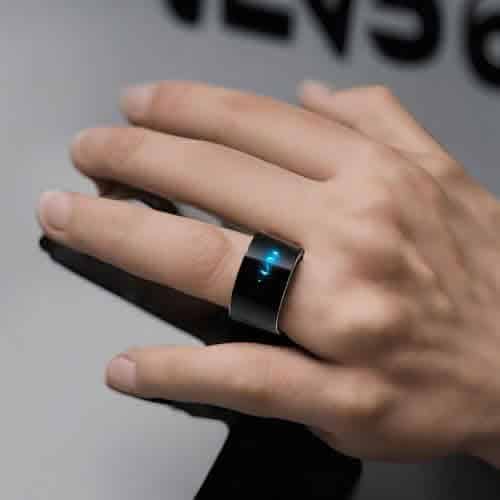
Before we dive into the “how-to,” let’s clear up a misconception. Unlike a smartwatch, most smart rings don’t have screens. To Get Smart Ring Notifications, you are relying on two primary feedback loops: haptic vibration and tiny LED light pulses.
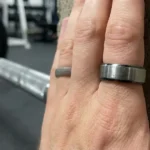
From an insider perspective, the engineering challenge here is massive. You’re trying to fit a linear resonant actuator (LRA) or a piezo haptic driver into a space no thicker than a few stacked credit cards. This is why you’ll notice that a “call” vibration feels different from a “text” vibration. On high-end rings like the RingConn or certain Circular models, the motor is tuned to specific frequencies. If you aren’t feeling your alerts, it’s often because the ring is too loose on your finger. In my experience, wearing the ring on your index or middle finger provides the best contact with the skin for feeling those subtle pulses.
Setting Up Notifications on iPhone
iOS is notoriously protective of its ecosystem. To Get Smart Ring Notifications on an iPhone, you have to navigate the “Apple Tax” on your attention.
- The Bluetooth Handshake: First, ensure your ring is paired via the companion app (like Oura, Ultrahuman, or RingConn). Don’t just pair it in the iPhone’s Bluetooth settings; let the app do the heavy lifting. This establishes a “Bluetooth Low Energy” (BLE) bond that is less likely to be dropped by iOS to save battery.
- System Notifications: Go to Settings > Bluetooth, find your ring, and tap the “i” icon. Ensure “Share System Notifications” is toggled on. If this is off, your ring is essentially a deaf mute.
- The App-Specific Gatekeeper: Open your ring’s companion app. There’s usually a “Notifications” or “Alerts” menu. You’ll need to grant the app permission to “Always” access your location and notifications.
- Focus Modes: This is the #1 reason my notifications fail. If you have “Do Not Disturb” or a custom “Work” Focus mode active, iOS will block the data packet from reaching the ring. You must go into your Focus settings and “Allow” your ring’s app as an exception.
Configuring Notifications on Android
Android gives you more freedom, but that comes with more “fiddling.” Getting a device to Get Smart Ring Notifications on a Pixel or Galaxy requires a different approach.
- Notification Access: Android has a specific menu called “Notification Access.” You usually have to search for this in your Settings. You must explicitly toggle your smart ring’s app to “Allowed.” This allows the app to “read” your incoming alerts and relay them via BLE to your finger.
- Battery Optimization: Android loves to kill background apps. If your ring stops notifying you after 20 minutes of inactivity, it’s because the OS put the app to sleep. Go to Settings > Apps > [Your Ring App] > Battery and set it to “Unrestricted.”
- The “Vibration Pattern” Secret: Some Android-compatible rings allow you to customize the vibration. I personally set my “Work Email” to a short double-tap and “Incoming Calls” to a long, continuous pulse. This lets me keep my phone in my pocket during meetings while still knowing exactly who is trying to reach me.
Pro-Level Troubleshooting: Why Isn’t It Buzzing?
I’ve been in the room when these firmware updates are being coded, and I can tell you that 90% of notification failures come down to “ghosting.” This is when the BLE connection stays “active” but stops passing data.
- The Power Cycle Trick: Don’t just turn Bluetooth off and on. Turn your phone’s Bluetooth off, kill the ring app entirely (swipe it away), wait 10 seconds, and then restart.
- The Charging Dock Reset: If your ring is acting glitchy, place it on its charging dock. Many rings (like the Oura) use the dock as a “reboot” trigger. It forces the firmware to re-initialize its communication stack.
- Firmware Mismatch: Always check if there’s a pending firmware update. Manufacturers frequently tweak the “buffer” time for notifications to prevent them from draining the tiny 15-22mAh batteries found in these rings.
Managing Your Battery While Staying Connected
Every time you Get Smart Ring Notifications, you’re using a burst of energy. A vibration motor is one of the most power-hungry components in a wearable.
I’ve found that if I enable every single notification—Instagram likes, news alerts, emails—my battery life drops from six days to barely three. My “insider” advice? Be ruthless. Only enable notifications for things that require immediate action: phone calls and direct messages. Your finger doesn’t need to vibrate every time someone retweets you.
Looking Ahead: The Future of Ring Feedback
We are starting to see the “Gen 3” of notification tech. Some newer rings are experimenting with bone conduction, where the ring vibrates against your finger bone to create a sound only you can hear when you press your finger to your ear. It sounds like sci-fi, but it’s the logical next step for those of us who want to Get Smart Ring Notifications without even looking at a wrist.
While we wait for that tech to become mainstream, the best thing you can do is master the settings you have now. A well-configured smart ring is the ultimate “filter” for the digital noise of the modern world. It allows you to stay present in the room while staying informed of the things that actually matter.
Frequently Asked Questions
Can I get notifications if my phone is in another room? Generally, no. Smart rings rely on Bluetooth Low Energy, which typically has a range of about 30 feet. If you walk to the kitchen and leave your phone in the bedroom, you likely won’t Get Smart Ring Notifications. Metal walls and large furniture can further shorten this range.
Will my smart ring vibrate for every app? This depends on the manufacturer. High-end rings allow you to select specific apps (WhatsApp, Slack, Calendar), while more basic “health-first” rings might only support calls and SMS. Check your companion app’s “Notification” settings to see what’s supported.
Does getting notifications drain the battery faster? Yes, significantly. The vibration motor is a physical moving part. If you receive 100 notifications a day, expect your battery life to be cut by 30-40%. I recommend only enabling “VIP” alerts to preserve longevity.
Can I read the text of the message on the ring? No. Since smart rings lack screens, you cannot read text. You are getting a “signal” (vibration or light) that tells you a message has arrived. You’ll still need to check your phone or a smartwatch to read the content.
Why does my ring vibrate for a call but not for a text? This is often a permission issue. On iPhone, ensure “Share System Notifications” is on. On Android, make sure the app has “Notification Access.” Also, check if the specific app (like Messages) is toggled “on” within your smart ring app’s settings.
Is it possible to turn off notifications at night? Absolutely. Most apps have a “Do Not Disturb” or “Sleep Mode” that mirrors your phone’s settings. I highly recommend this so you don’t Get Smart Ring Notifications while you’re trying to track your REM cycles!
Can I set different vibration strengths for different people? Currently, most rings like the Oura or Samsung Galaxy Ring have a set vibration intensity to save battery. However, some “smart” rings that lean more into the notification space (like the Circular) allow you to customize the intensity. Check your app’s “Haptics” or “Vibration” menu to see if a slider is available.
What happens if I’m in Airplane Mode? In Airplane Mode, Bluetooth is typically disabled, meaning you won’t Get Smart Ring Notifications. However, you can manually turn Bluetooth back on while in Airplane Mode. The ring will continue to track your health data locally on its internal memory, but it needs that active Bluetooth link to buzz your finger for an incoming call.
My ring vibrates, but the app doesn’t show why. What’s happening? This is often a “phantom notification.” It usually happens when a system process on your phone (like a background update or a “Data Synced” message) triggers a notification that is immediately dismissed by the OS. The ring “sees” the trigger and buzzes, but by the time you look at your phone, the message is gone. Try turning off “System” notifications in your ring app to prevent this.
Will the vibration wake me up at night? If you have a heavy haptic setting, it absolutely can. Most users who want to Get Smart Ring Notifications during the day use the “Scheduled Do Not Disturb” feature within the ring’s app. This ensures the ring stays silent while you are in your “Sleep” window, even if your phone receives a high-priority alert.
Can I use my ring to find my phone? Some rings have a “Find My Phone” feature. When you perform a specific gesture (like a double tap of the ring against your thumb), it sends a signal to your phone to play a loud sound. This is technically a “reverse” notification and is one of the most useful features of the BLE connection.
Does water affect the notifications? Most smart rings are rated for 5ATM or 10ATM (50 to 100 meters of depth), so the haptic motor is completely sealed. However, if you are swimming, the water pressure and the density of the water can “muffle” the vibration, making it harder to feel. You’ll likely Get Smart Ring Notifications just fine once you’re back on dry land.
Additional Helpful Information
- Keep your smart ring firmware updated – Smart Ring Firmware Update
External Authoritative Links
- For more technical deep dives into wearable technology, you can check out resources like the IEEE Xplore
- for research on haptic feedback or Bluetooth SIG
- for the latest on BLE protocols. If you’re looking for specific device comparisons, the Verge’s wearable section often has great hands-on reviews.