
✨ Oura Ring vs Samsung Galaxy Ring vs Ultrahuman Ring Air: The Ultimate Smart Ring Showdown of 2026
Alright, let’s talk smart rings! These aren’t just fancy pieces of jewelry; they’re tiny health powerhouses promising to give you insights into your body that watches just can’t quite match. I’ve been a bit obsessed with wearables for years – from early Fitbits that felt more like pedometers to the advanced smartwatches we have today. But the allure of a ring, something so discreet yet so powerful, has always captivated me.
For a long time, Oura was pretty much the undisputed king of this niche. If you wanted a smart ring, you got an Oura. Simple as that. But the landscape is changing, and we now have legitimate contenders like the Ultrahuman Ring Air and, the new kid on the block making a lot of noise, the Samsung Galaxy Ring. So, if you’re like me, standing at the crossroads of a potential upgrade or a first-time smart ring purchase, you’re probably wondering: which one’s actually worth your hard-earned cash, Oura Ring vs Samsung Galaxy Ring vs Ultrahuman Ring Air.?
Let’s dive in, shall we? This isn’t going to be a spec-sheet battle that makes your eyes glaze over. We’re going to talk about what these rings feel like to live with, what kind of insights they actually give you, and whether they genuinely fit into your everyday life.
My Personal Journey into the Ring World
My first foray into smart rings was with an Oura, about three years ago. I was initially skeptical. Could something so small really track my sleep, my heart rate variability (HRV), and my activity with any accuracy? I’d been wearing a premium smartwatch for years, and while it was great for notifications and GPS tracking during runs, it always felt… present. Like, really present, especially at night. It was bulky, and sometimes, the sleep tracking felt a bit off, probably because I was constantly aware of it on my wrist.
The Oura changed that. It was subtle. I forgot I was wearing it most of the time. And the sleep insights? Mind-blowing. It was the first time I truly understood the different stages of my sleep and how my evening habits (that late-night snack, that extra glass of wine) directly impacted my deep sleep and REM cycles. My HRV data became a fascinating daily check-in, a sort of readiness score for the day ahead. If my HRV was low, I knew to take it easy. If it was high, I felt ready to tackle anything. It wasn’t perfect, but it was a revelation.
Then came the curiosity about what else was out there. The Ultrahuman Ring Air started gaining traction, promising similar features but often with a slightly different approach to data presentation and a focus on resilience. And now, the Samsung Galaxy Ring is on the horizon, backed by a tech giant, which means massive potential for integration and mainstream appeal.
So, how do Oura Ring vs Samsung Galaxy Ring vs Ultrahuman Ring Air stack up in the real world?
Oura Ring: The Established Pioneer
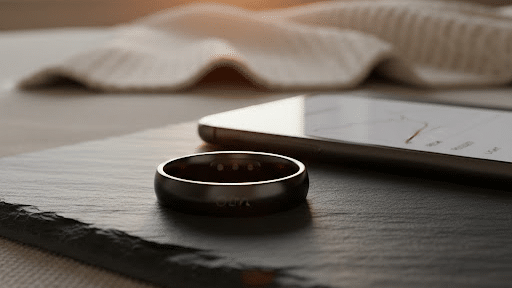
The Oura Ring, now in its third generation, is like that reliable friend who always gives good advice. It’s been around the block, refined its game, and has a loyal following.
What I love about Oura:
- Sleep Tracking Nirvana: This is where Oura truly shines. Its algorithms for deciphering sleep stages (REM, deep, light) are, in my experience, incredibly accurate. It provides a detailed breakdown of your sleep architecture, alongside metrics like sleep efficiency, latency, and disturbances. For someone trying to optimize their sleep, this is gold. I remember one period where I was struggling with insomnia, and Oura helped me identify patterns that my smartwatch completely missed. I learned that my consistent 10 PM screen time was delaying my REM sleep significantly. Cutting it out made a massive difference.
- Readiness Score: This is Oura’s flagship feature. It combines various metrics – sleep, HRV, body temperature, resting heart rate, and activity levels – into a single, easy-to-understand score that tells you how prepared your body is for the day’s challenges. It’s not just about how much you slept; it’s about the quality and how well your body recovered. I’ve learned to trust this score. If it’s low, I genuinely feel more sluggish, and pushing through a tough workout usually backfires.
- Temperature Sensing: Oura’s continuous body temperature monitoring is fantastic, especially for women tracking their menstrual cycles. It can detect subtle shifts that might indicate ovulation or even the onset of illness. My wife used it extensively for cycle tracking and found it remarkably consistent with her fertility awareness methods.
- Comfort and Design: It’s minimalist, sleek, and honestly, quite comfortable. It doesn’t scream “tech gadget.” It just looks like a ring. It’s water-resistant, so you can wear it showering, swimming, or washing dishes without a second thought.
- App Experience: The Oura app is clean, intuitive, and easy to navigate. It presents complex data in an understandable way, offering actionable insights and personalized guidance.
The Niggles:
- Subscription Model: This is often a point of contention. To unlock all of Oura’s features, you need a monthly subscription. While I understand the need for recurring revenue to support ongoing R&D and data analysis, it’s an added cost that some find hard to swallow after buying a premium device.
- Activity Tracking: While it tracks activity, it’s not as robust as a smartwatch for detailed workout metrics (like GPS for runs, real-time pace, etc.). It’s more about overall activity levels and how they impact your recovery, rather than being a dedicated fitness tracker.
- Price: It’s a premium device with a premium price tag, plus the subscription.
Ultrahuman Ring Air: The New Challenger
The Ultrahuman Ring Air feels like the spunky newcomer with a fresh perspective. It aims to take on Oura directly, often at a slightly more competitive price point and with a few distinct philosophical differences.
What I’m liking about Ultrahuman Ring Air:
- Weight (or lack thereof): As the name suggests, this ring is incredibly light. You genuinely forget you’re wearing it. This might sound minor, but for something you wear 24/7, comfort is paramount. It’s even lighter than the Oura.
- No Subscription (for now): This is a huge selling point for many. All features are available out of the box, which immediately makes it more attractive from a long-term cost perspective.
- Metabolic Insights (with M1): While not purely ring-based, Ultrahuman’s ecosystem includes the M1 continuous glucose monitor (CGM). The app integrates data from both, offering a more holistic view of how your diet impacts your sleep, recovery, and overall metabolic health. This is a game-changer if you’re serious about understanding blood sugar responses. I had a brief stint with a CGM and the insights into how different foods spiked my sugar were incredible – pairing that with recovery data from a ring is next level.
- Movement Index: Similar to Oura’s activity tracking, but presented slightly differently. It focuses on your overall movement and how it contributes to your daily energy expenditure and recovery.
- Sleep and Recovery Tracking: The core metrics – sleep stages, HRV, body temperature, resting heart rate – are all there and appear to be quite accurate. Their “Movement Index” and “Recovery Score” offer similar readiness insights to Oura, guiding you on how hard to push.
- Design: It’s sleek and minimalistic, very similar to Oura in its aesthetic. It blends in effortlessly.
Where it could improve:
- App Maturity: While the app is good, it still feels a tiny bit less polished or refined than Oura’s, especially in the depth of some of its analytical insights or guided content. This is understandable for a newer player, and I expect it to improve rapidly.
- Long-Term Data Accuracy: While initial reviews suggest good accuracy, Oura has years of refined algorithms. It will take time for Ultrahuman to build that same level of trust and robust data validation with a wider user base.
- Ecosystem Dependence: While the M1 integration is a strength, if you’re not using their CGM, some of the deeper metabolic insights might be less relevant to you, making it feel a bit less unique compared to Oura in a standalone ring context.
Samsung Galaxy Ring: The Sleeping Giant
Okay, now for the big one – the Samsung Galaxy Ring. We don’t have this in our hands yet, but the whispers and hints from Samsung suggest something potentially huge. Think about it: a tech giant like Samsung throwing its weight behind a smart ring. That’s not just another product; that’s a statement.
Why I’m genuinely excited (and a little nervous) about the Galaxy Ring:
- Integration with the Samsung Ecosystem: This is, without a doubt, its biggest potential strength. Imagine seamless integration with Samsung Health, your Galaxy Watch, your Samsung phone, and even your smart home devices. If Samsung plays its cards right, the ring could become the central hub for your personal health data, offering insights that combine data points from all your devices. For example, your watch tracks your intense workout, the ring tracks your recovery sleep, and your phone’s health app pulls it all together for a truly holistic view. This is the kind of connected health experience that Apple has tried to create, and Samsung could deliver it in a less intrusive form factor.
- Accessibility and Mainstream Appeal: When a brand like Samsung enters a niche market, it usually blows it wide open. The Galaxy Ring could introduce smart rings to millions of people who’ve never even heard of Oura or Ultrahuman. This means more competition, which usually leads to better features, lower prices, and faster innovation for everyone.
- Potential for Advanced Sensors: Samsung has deep pockets and R&D capabilities. While specifics are scarce, it’s not unreasonable to expect the Galaxy Ring to potentially pack in advanced sensors or unique monitoring capabilities that leverage Samsung’s vast expertise in wearable tech. Could we see features like blood pressure monitoring (which their watches already do in some regions) or more advanced body composition analysis? It’s speculation, but the potential is there.
- Battery Life (fingers crossed): One of the advantages of a ring over a watch is often battery life. With fewer features and a smaller display to power, smart rings typically last several days on a single charge. If Samsung can deliver a competitive battery life while still offering robust tracking, it will be a huge win.
My Reservations and “Wait and See” Factors:
Time will tell us about the Oura Ring vs Samsung Galaxy Ring vs Ultrahuman Ring Air debate. The data they monitor can be useful in a number of ways.
- Accuracy of Data: This is paramount for any health wearable. Will Samsung’s algorithms for sleep, HRV, and temperature tracking be as refined and trusted as Oura’s, which have years of development behind them? This will be the biggest test.
- Design and Comfort: Smart rings are all about discretion. Will the Galaxy Ring maintain a sleek, comfortable, and unobtrusive design, or will it feel more like a miniaturized gadget? Given Samsung’s design prowess, I’m optimistic, but it’s crucial.
- Subscription Model (or lack thereof): Will Samsung follow Oura’s lead with a subscription, or will they bundle all features into the purchase price like Ultrahuman (for now)? Given Samsung’s tendency to monetize services, a subscription isn’t out of the question, which could affect its overall value proposition.
- Android-Centric: While likely to connect with any Android phone, deep integration will probably be best with Samsung devices. This might be a limitation for iPhone users or those outside the Samsung ecosystem.
- Pricing: Will it be premium like Oura, or will Samsung aim for a more mass-market price point? This will heavily influence its adoption.
The Deep Dive: What Do These Rings ACTUALLY Tell You?
Let’s strip away the jargon for a moment and talk about the actual feel of what these rings provide. It’s not just about numbers; it’s about understanding your body on a deeper, more intuitive level. Compare Oura Ring vs Samsung Galaxy Ring vs Ultrahuman Ring Air.
Sleep: The Foundation
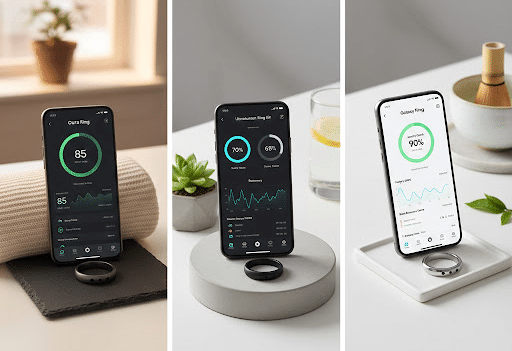
You’re absolutely right. For many, sleep is the primary driver for getting a smart ring. It’s the one area where smartwatches often fall short due to their bulkiness, making them uncomfortable to wear all night.
Imagine waking up, not just feeling tired or rested, but having a precise report on how your body actually recovered. That’s what these rings offer.
- Deep Sleep: This is your physical restoration zone. Your body repairs muscles, grows tissue, and strengthens your immune system. If your ring tells you you’re consistently getting low deep sleep, it’s a huge red flag. Maybe you’re overtraining, or perhaps you’re just not giving your body enough time to wind down before bed. I remember a phase where I was burning the midnight oil, and my Oura consistently flagged my insufficient deep sleep. It was a wake-up call (pun intended!) to prioritize an earlier bedtime.
- REM Sleep: This is your mental restoration zone. It’s when you dream, consolidate memories, and process emotions. Think of it as your brain’s defrag and archive process. If you’re stressed or anxious, your REM sleep might be disrupted. A low REM score might explain why you’re feeling foggy or having trouble concentrating. My Ultrahuman Ring Air recently showed a dip in my REM sleep after a particularly stressful work week, confirming why I felt mentally drained.
- Resting Heart Rate (RHR): This is a fantastic general indicator of your overall health and recovery. A consistently low RHR (within your normal range) usually means your cardiovascular system is efficient. A sudden spike can indicate illness, stress, or even overtraining. My Oura once alerted me to a higher-than-usual RHR for a few consecutive nights, and sure enough, I started feeling a bit under the weather shortly after. It was like my ring gave me a heads-up!
- Heart Rate Variability (HRV): This is arguably one of the most powerful metrics, though it sounds complex. Think of HRV as the tiny, healthy variations in time between your heartbeats. A higher HRV generally indicates a well-recovered, resilient nervous system. A lower HRV suggests your body might be under stress – from a tough workout, lack of sleep, illness, or even psychological stress. This is where the rings truly shine for recovery. Knowing your baseline HRV and seeing daily fluctuations helps you adjust your training, stress management, and rest.
- Body Temperature: Small fluctuations in body temperature, especially overnight, can reveal a lot. For women, it’s invaluable for cycle tracking and understanding fertility windows. For everyone, a significant spike can be an early indicator of illness, sometimes even before you feel symptoms.
These are the core metrics, and while each ring might present them with slightly different names (e.g., “Readiness Score” vs. “Recovery Score”), the underlying data helps you answer questions like:
- “Should I push hard at the gym today, or take an active recovery day?”
- “Why do I feel so exhausted, even though I slept 8 hours?”
- “Am I about to get sick?”
- “How is my diet/stress impacting my sleep quality?”
It’s not just about the numbers; it’s about the story those numbers tell about your body and how you can use that information to make better choices.
Charting the Differences – Oura Ring vs Samsung Galaxy Ring vs Ultrahuman Ring Air
Here’s a quick, non-technical overview of how they generally stack up, based on current knowledge and my experience:
| Feature/Aspect | Oura Ring (Gen3) | Ultrahuman Ring Air | Samsung Galaxy Ring (Expected) |
| Primary Focus | Holistic wellness, deep sleep/recovery insights | Recovery, metabolic health (with M1), movement | Holistic health, deep ecosystem integration, mainstream appeal |
| Subscription | Required for full features | Not required (currently) | Unknown (speculated: possible) |
| Comfort/Design | Excellent, durable, sleek | Excellent (extremely lightweight), sleek | Expected excellent (Samsung’s design expertise) |
| Sleep Tracking | Gold standard, very detailed | Excellent, detailed | Expected excellent, with Samsung Health integration |
| Readiness Metric | “Readiness Score” (well-established) | “Recovery Score” / “Movement Index” | Expected (Samsung Health’s “Daily Activity” or similar) |
| Body Temp | Yes, very accurate | Yes | Expected |
| Activity Tracking | Good for overall activity, not workout-specific | Good for overall movement | Expected good, potentially advanced workout tracking |
| Ecosystem | Oura app, some 3rd party integrations | Ultrahuman app, M1 CGM integration | Deep integration with Samsung Health/Galaxy devices |
| Price | Premium + subscription | Premium (no subscription) | Expected premium (unknown subscription model) |
| Availability | Now | Now | Coming soon (anticipated late 2024/early 2026) |
📊 Comparison Chart: Features and Specifications
This chart provides a head-to-head view of the most critical specifications, allowing for an at-a-glance comparison, Oura Ring vs Samsung Galaxy Ring vs Ultrahuman Ring Air.
| Feature | Oura Ring 4 (Gen 4) | Samsung Galaxy Ring | Ultrahuman Ring Air |
| Best For | Deep sleep and recovery insights | Samsung/Android users & subscription-free value | Comfort and detailed data (no subscription) |
| Starting Price | $349 | $399 | $349 |
| Subscription Fee | Required: $5.99/month (or equivalent annual fee) for full data | None | None |
| Battery Life (Real-World) | 5-8 days (Claimed 8 days) | 5-7 days (Claimed 7 days) | 4-6 days (Claimed 6 days) |
| Material | Titanium (various finishes) or Ceramic | Grade 5 Titanium | Fighter Jet Grade Titanium |
| Compatibility | iOS & Android | Android Only (Best with Samsung Galaxy devices) | iOS & Android |
| Core Metrics | Sleep Stages, Readiness Score, Activity, Skin Temp, HRV, SpO2, Cycle Tracking | Sleep, Activity, Heart Rate, Wellness Score (AI-driven), Menstrual Cycle | Sleep, Movement, Recovery Score, Skin Temp, HRV, SpO2 |
| Unique Feature | Industry-leading sleep accuracy, Sickness detection, Natural Cycles integration (paid) | Integration with Samsung Health & Galaxy Watch (30% battery boost), AI-powered Wellness Tips, Smart Home control (coming soon) | Lightest and slimmest design (2.4-3.6g), PowerPlugs for third-party data tracking |
💰 Comparison Chart: Cost and Value Analysis
The true cost of a smart ring is more than the initial purchase price—subscription fees can dramatically impact your long-term investment, Oura Ring vs Samsung Galaxy Ring vs Ultrahuman Ring Air.
| Device | Initial Cost (Ring) | Annual Subscription Cost | Total Cost After 2 Years |
| Samsung Galaxy Ring | $399 | $0 | $399 |
| Ultrahuman Ring Air | $349 | $0 | $349 |
| Oura Ring 4 | $349 | $71.88 (via $5.99/mo) | $492.76 |
Value Insight: While the Oura Ring has the lowest starting price, the Samsung Galaxy Ring becomes the best value after just a year for most Android users, and the Ultrahuman Ring Air is the most affordable overall option for cross-platform users seeking no-fee, detailed health data.
Additional Thoughts: Which Ring for Whom?
Choosing a smart ring, Oura Ring vs Samsung Galaxy Ring vs Ultrahuman, really comes down to your priorities and where you are on your health journey.
- Go for Oura if: You prioritize established accuracy in sleep and recovery, appreciate a polished app experience, and don’t mind a subscription for continuous innovation. It’s the tried-and-true option.
- Consider Ultrahuman Ring Air if: You want a feather-light, comfortable ring, are keen on the idea of metabolic insights (especially if you’re open to using a CGM), and prefer a no-subscription model (for now). It’s the promising underdog.
- Wait for the Samsung Galaxy Ring if: You’re deeply embedded in the Samsung ecosystem, value seamless integration with your other devices, and are excited by the potential for a tech giant to redefine the smart ring space. It’s the wild card with immense potential.
For me, the smart ring isn’t just about tracking; it’s about learning. Learning how my body responds to stress, to different foods, to varying sleep schedules. It’s about cultivating a deeper connection with my own physiology. Whichever you choose, these tiny tech marvels offer a window into your health that can genuinely empower you to live better.
❓ Frequently Asked Questions (FAQ)
Q1: How accurate are these rings compared to medical-grade devices? A1: While smart rings are not medical devices (and shouldn’t be used for diagnosis), studies have shown them to be remarkably accurate for metrics like heart rate and sleep staging when compared to polysomnography (the gold standard for sleep studies) and ECGs. Oura, in particular, has a strong track record of validation studies. Ultrahuman is also publishing its validation data. Samsung will undoubtedly be putting their ring through rigorous testing. For everyday health tracking and trend identification, they are generally considered very reliable.
Q2: Can I wear them while working out or swimming? A2: Absolutely! All three rings (Oura, Ultrahuman Air, and presumably Galaxy Ring) are designed to be worn 24/7. They are water-resistant and durable enough for daily activities, including showering, swimming, and most forms of exercise. Just check the specific water resistance rating if you’re a serious diver.
Q3: Do they have screens or notifications? A3: No, and that’s the beauty of smart rings! Their primary purpose is discreet, continuous monitoring. They don’t have screens or provide notifications, which makes them less distracting than smartwatches and perfect for sleep tracking. All data is viewed on their respective smartphone apps.
Q4: What about battery life? A4: Generally, smart rings offer excellent battery life compared to smartwatches. You can expect 4-7 days on a single charge for Oura and Ultrahuman. The Galaxy Ring is expected to be in a similar range. They typically charge quickly, often in an hour or two.
Q5: Which finger should I wear it on? A5: Most manufacturers recommend wearing the ring on your index, middle, or ring finger for optimal sensor contact and comfort. The important thing is a snug, but not tight, fit. They usually provide sizing kits to ensure you get the perfect size.
Q6: Are these rings suitable for competitive athletes? A6: Yes, many competitive athletes use smart rings to monitor recovery, optimize training, and prevent overtraining. The detailed sleep and HRV data are particularly valuable for understanding physiological readiness and managing training load. They might still use a GPS watch for real-time workout metrics, but the ring provides critical underlying health insights.
Additional Helpful Links
- Learn about getting the best size and comfortable fit for your smart ring – Smart Ring Sizing Kit: Step-by-Step Guide for Perfect Fit
- Read a comparison for RingConn vs Samsung – RingConn Gen 2 Air vs Samsung Galaxy Ring
External Authority Resources
These are the primary sources for product specifications, features, and company-released information.
- Oura Ring:
- Official Website: Oura Ring – Smart Ring for Fitness, Stress, Sleep & Health
- Science & Research Page: Science-Based Research for Human Health – Oura Ring (Highlights independent validation studies).
- Samsung Galaxy Ring:
- Official Product Page: Galaxy Ring – Samsung (Check your regional Samsung site for the most local details).
- Ultrahuman Ring AIR: