
My Time with the Samsung Galaxy Ring: The Good, the Bad, and the Honestly Ugly
I’ve spent the last decade with various pieces of glass and metal strapped to my wrist. From the early days of the Pebble to the ultra-rugged Garmin Fenix, I thought I knew what “wearable tech” felt like. But after wearing the Samsung Galaxy Ring for the past month, I’ve realized that the future of health tracking might not have a screen at all.
This isn’t just another gadget. It’s a shift in philosophy. When I first slipped the titanium band onto my index finger, I felt a strange sense of relief. There were no buzzing notifications, no glowing OLED screen demanding my attention, and no “move” reminders while I was stuck in a board meeting. It was just… there.
In this Samsung Galaxy Ring review, I’m going to skip the marketing fluff you’ll find on the official product pages. I want to talk about how this thing actually lives on your finger, how it handles the grit of daily life, and whether it’s actually worth the $400 asking price—especially when the competition is so fierce.
The Industry Insider Perspective: Why Now?
To understand the Galaxy Ring, you have to understand the current state of the “Silicon Alley” wearable market. For years, the Oura Ring held a near-monopoly on the finger-based tracker market. But industry insiders knew it was only a matter of time before a titan like Samsung stepped in.
The goal here isn’t just to sell a ring; it’s about ecosystem lock-in. Samsung is building a “Health Bio-Map.” By combining data from your phone, your watch (if you wear one), and now a ring, they are creating a 24/7 data loop that is incredibly hard for users to leave once they’ve started. The internal hardware—the PPG sensors and the skin temperature thermistors—are miniaturized versions of what we see in the Galaxy Watch 7, but without the battery drain of a display.
The Good: Where It Actually Shines
1. The Comfort Factor (The “Invisible” Tracker)
The biggest win for this Samsung Galaxy Ring review is the weight. At less than 3 grams, it is freakishly light. I’m a heavy sleeper, and I’ve always found the Apple Watch or even the Galaxy Watch too bulky for overnight wear. I end up hitting my head with the watch face or waking up with a sweaty wrist. The Ring disappears. Within 48 hours, I forgot I was wearing it. This is the ultimate “passive” tracker.
2. No Subscription Fees
This is the “Oura-killer” feature. If you buy an Oura Ring, you’re looking at a monthly fee just to see your own data. Samsung has taken a page out of the old-school tech playbook: you buy the hardware, you own the data. Everything lives within the Samsung Health app for free. In a world where every app wants $9.99 a month, this is a breath of fresh air.
3. The Charging Case
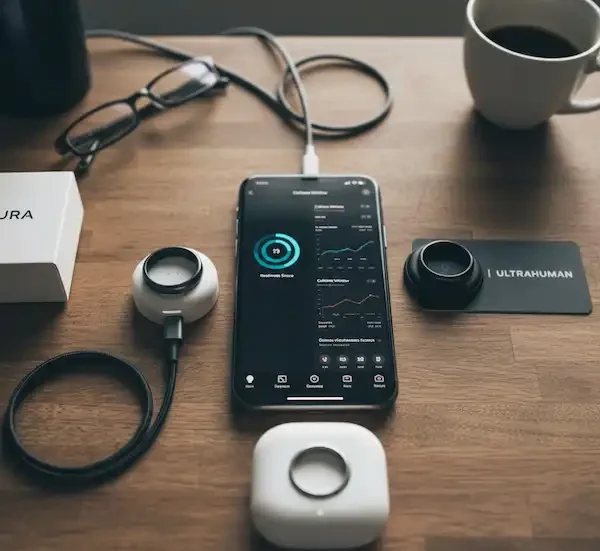
Most smart rings use a proprietary puck that is easy to lose. Samsung took inspiration from the Galaxy Buds. The Ring comes with a sleek, transparent charging case that has its own internal battery. You can drop the ring in, toss the case in your bag, and it charges on the go. It’s a brilliant design choice that makes traveling a breeze.
4. Gestures and Ecosystem Integration
If you have a Samsung phone, you can use a “double-pinch” gesture with your ring finger to dismiss alarms or take a photo. It feels like magic. I used this during a family dinner to snap a group photo from my S24 Ultra across the room. It worked flawlessly, though I did look a bit like I was performing a silent magic trick.
The Bad: The Growing Pains
While the hardware is impressive, this Samsung Galaxy Ring review wouldn’t be honest without mentioning the friction points.
1. Android-Only (Mostly)
Let’s get this out of the way: if you are on an iPhone, walk away. Unlike some older Samsung gear, the Galaxy Ring is strictly for the Android ecosystem. Even then, to get features like “Energy Score” or the gesture controls, you really need a Samsung Galaxy device. This walled garden approach is frustrating for people who like to mix and match their tech.
2. The Scratch Factor
Samsung claims the ring is made of Grade 5 Titanium. While that sounds “space-age,” the finish is still prone to scuffs. I’m an avid gym-goer, and after three sessions with a barbell, the bottom of my ring showed visible micro-abrasions. If you’re a weightlifter or a rock climber, you’re going to want to take this off, which defeats the purpose of a 24/7 tracker.
3. Sizing is a Chore
You cannot just order this ring based on your “wedding band size.” You have to get the sizing kit first. Even then, my finger swells during the day and shrinks at night. I found that the size 10 I picked was perfect at 2:00 PM but felt like it was going to fly off my hand at 7:00 AM.
The Ugly: The Hard Truths
This is the part of the Samsung Galaxy Ring review where we look at the stuff that isn’t quite ready for prime time.
1. Data Accuracy in the “Grey Zones”
When it comes to resting heart rate and sleep stages, the Ring is excellent. It aligns closely with my Whoop strap. However, during high-intensity interval training (HIIT), the Ring struggles. Because there is no “tightness” adjustment like a watch strap, the Ring can shift during a run or a burpee, leading to “flatline” heart rate data. If you are a serious athlete, the Ring is a supplement, not a replacement for a chest strap.
2. The Price Tag
$399.99 is a lot of money for a device with no screen and a battery that will likely degrade in 3-4 years. Unlike a mechanical watch or even a piece of jewelry, this is a disposable tech product. When the battery dies, you can’t replace it. You’re essentially “renting” this health data for about $100 a year over the life of the product.
Use Cases: Who Is This Actually For?
During my testing for this Samsung Galaxy Ring review, I found three specific types of people who will love this:
- The Sleep Optimizer: If you hate watches but obsess over your REM cycles and blood oxygen levels, this is the gold standard. The skin temperature sensor is particularly helpful for tracking the onset of a cold or monitoring menstrual cycles via Natural Cycles integration.
- The “Digital Detoxer”: I’ve started leaving my phone in the locker at the gym and my watch at home. The Ring still tracks my heart rate and calories, allowing me to disconnect without losing my “streaks.”
- The Professional: Wearing a chunky Garmin with a suit looks… okay. But wearing a sleek, matte black ring? It’s invisible. It allows you to maintain your professional aesthetic while still gathering data on your stress levels during a high-stakes presentation.
Why Buy Samsung Over the Rest?
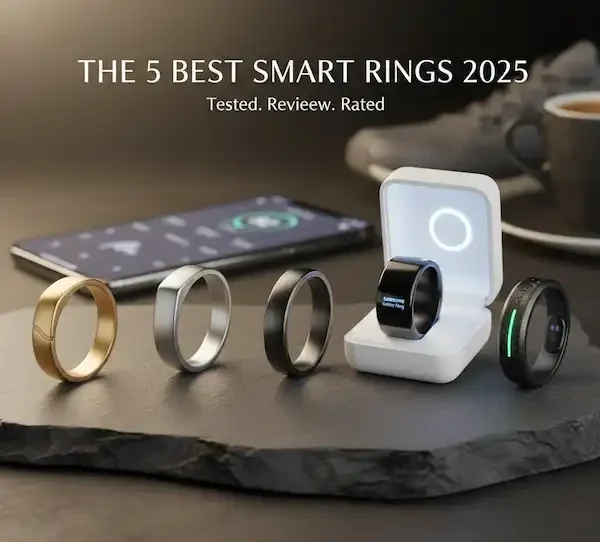
If you’re looking at this Samsung Galaxy Ring review and comparing it to the Oura or the RingConn, the reason to go Samsung is simple: Reliability and Scale.
Samsung is a massive conglomerate. They aren’t a startup that might go bust in two years. Their Samsung Health platform is one of the most robust in the world. When you buy a Galaxy Ring, you’re getting a device that syncs with your TV (to show heart rate during a workout), your tablet, and your phone. It’s the sheer convenience of the “Samsung Cloud” that makes it a better buy for current Galaxy users.
My Personal Anecdote: The “Stress” Discovery
One Tuesday afternoon, I noticed my Energy Score in the Samsung Health app was unusually low—a 42 out of 100. I felt fine, or so I thought. But looking at the data from the ring, my heart rate variability (HRV) had tanked overnight. Taking the hint, I canceled my heavy leg day at the gym and just did some light stretching and went to bed early. By the next morning, I had a full-blown fever. The ring knew I was getting sick before my brain did. That moment of “preventative maintenance” for my body was when I realized the ring had earned its place on my finger.
iPhone vs. Android: The Great Divide
As a tech journalist, I often carry both an iPhone and a Samsung. It’s important to note in this Samsung Galaxy Ring review that the experience is night and day. On Android, specifically a Galaxy S24, the Ring is a dream. On an iPhone, it’s a paperweight. If you are an Apple user waiting for a “smart ring,” you’re better off waiting for the rumored Apple Ring or sticking with Oura, which has a fantastic iOS app. Samsung has made it very clear: this is a “thank you” to their loyal Android fans.
Expert Insight: The Battery Longevity Secret
Inside the industry, we talk a lot about “cycle counts.” Small batteries, like the ones in the Galaxy Ring, are stressed every time they hit 0% or 100%. To make your Ring last five years instead of two, keep it between 30% and 80%. Since the Ring charges so fast in its cradle, I usually just pop it in the charger while I’m in the shower. This keeps the battery healthy and ensures I never miss a night of sleep tracking.
Technical Nuances: The Sensors
The Galaxy Ring uses a combination of:
- Optical Bio-signal Sensor: For heart rate.
- Accelerometer: For movement and steps.
- Skin Temperature Sensor: For sleep and cycle tracking.
What’s impressive is how Samsung managed to seal these in a resin coating that is water-resistant up to 10ATM. I’ve taken it in the pool and the sauna (though Samsung officially advises against extreme heat), and it hasn’t skipped a beat.
The Final Verdict: Should You Pull the Trigger?
After writing this Samsung Galaxy Ring review and living with the device, my conclusion is this: The Galaxy Ring is the best “secondary” wearable on the market.
If you already own a Galaxy Watch, the Ring acts as a “shift worker,” taking over when the watch is charging or when you’re sleeping. If you don’t want a watch at all, the Ring is the most discreet way to stay on top of your health.
It’s not perfect—the scratching is annoying, and the price is steep—but it is the most polished smart ring I have ever tested. It’s a statement piece that says you care about your health, but you don’t want to be a slave to a screen.
FAQ: Everything You’re Itching to Ask
Q: Do I need a Samsung phone for the Galaxy Ring to work?
A: While it technically works with other Android phones via the Samsung Health app, you lose about 30% of the features, including Energy Score, Galaxy AI health insights, and the gesture controls. If you have an iPhone, it will not work at all.
Q: Can I wear it while lifting weights?
A: You can, but I wouldn’t. The titanium is Grade 5, but the coating will scratch against steel barbells. For the best longevity, I recommend a silicon “ring protector” or simply taking it off during your sets.
Q: How long does the battery actually last?
A: In my experience with a size 10 ring, I got a solid 6 days. Smaller rings (sizes 5-7) have slightly smaller batteries and usually last about 5 days.
Q: Is it waterproof?
A: Yes, it’s rated for 10ATM and IP68. You can swim with it, shower with it, and wash your hands. Just be careful with salt water—always rinse it with fresh water afterward to prevent corrosion of the charging pins.
Q: Does it track GPS for runs?
A: No. The Ring has no GPS. It uses your phone’s GPS to map your runs. If you leave your phone at home, it will only estimate your distance based on your steps and stride length.
Q: What happens if I lose it?
A: There is a “Find My Ring” feature in the Samsung Wearable app. It will tell you the last place it was connected to your phone, and it can make the internal lights flash to help you find it under a couch cushion.
Q: How does this Samsung Galaxy Ring review compare it to the Oura Gen 3?
A: The Oura is slightly more accurate with sleep “readiness” scores, but the Samsung Ring wins on the lack of a monthly subscription and the superior charging case.
Q: Can I pay for things with the Ring (NFC)?
A: Sadly, no. Despite being a highly requested feature, the first-generation Galaxy Ring does not have NFC for Samsung Pay. You’ll still need your phone or watch for that.
Summary Table: The Samsung Galaxy Ring at a Glance
| Feature | Performance |
| Battery Life | 5-7 Days (Size dependent) |
| Weight | 2.3g to 3.0g |
| Subscription | $0 (Free) |
| Compatibility | Android 11.0+ (Samsung Galaxy Recommended) |
| Water Resistance | 10ATM / IP68 |
| Price | $399.99 |
In the end, this Samsung Galaxy Ring review finds that while the ring is a “luxury” item, it represents a massive step forward in making health technology invisible. It’s for the person who wants the data without the distraction. If you’re already in the Samsung ecosystem, it’s an easy recommendation. If you’re on the fence, wait for the first holiday sale—at $299, this would be an absolute steal.
The Samsung Galaxy Ring review journey has been eye-opening. It taught me that I don’t need a screen on my wrist to stay healthy; I just need a little bit of smart tech on my finger and the discipline to listen to what the data is telling me. Whether you’re an Android veteran or a curious newcomer, the Galaxy Ring is a bold, beautiful, and slightly flawed glimpse into the future of human-computer interaction.
Additional Helpful Information
- Read about the best smart ring for Android – Best Smart Ring for Android: Why the Galaxy Ring Wins in 2026