The Great Wearable Shutdown: What to Do if Your Smart Ring Brand is Banned
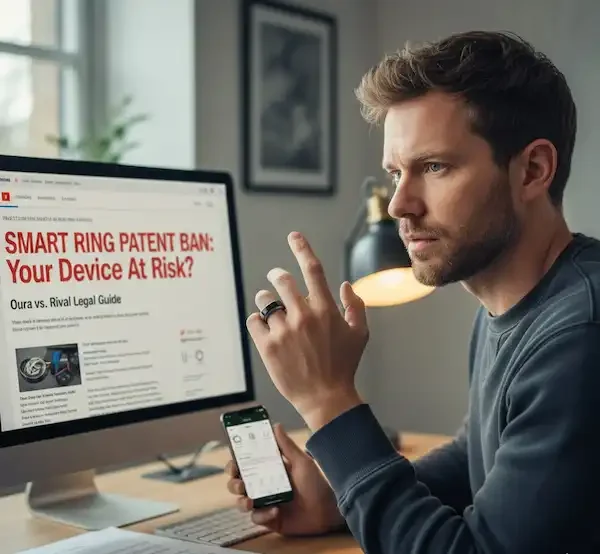
I remember sitting in my home office in late 2025, looking down at the matte black Ultrahuman Ring Air on my index finger, and wondering if I had just bought a very expensive, high-tech paperweight. The headlines were everywhere: the U.S. International Trade Commission (ITC) had issued a final ruling. Because of a massive legal clash—the Oura vs. Rival saga—certain rings were being effectively exiled from the U.S. market.
If you’ve followed the smart ring space for more than five minutes, you know it’s been a bit of a Wild West. But when the dust settled on the smart ring patent ban, it wasn’t just corporate drama; it was a real-world headache for those of us who rely on these tiny circles of titanium to tell us why we’re tired or if our heart rate variability is tanking.
If you find yourself wearing a ring from a brand that’s currently on the “no-fly” list, or you’re looking at an empty product page where your favorite tracker used to be, here is the roadmap for navigating the fallout.
The Landscape: Who Got Hit and Why?
The core of this mess is U.S. Patent No. 11,868,178, a piece of intellectual property owned by Oura that covers how you fit a curved battery and a circuit board into a ring shape. It sounds broad—and it is—but the ITC agreed that it’s enforceable.
| Brand | Current Legal Status (U.S.) | Can You Still Use It? |
| Ultrahuman | Import/Sale Ban enforced (Oct 2025) | Yes, app and servers remain active. |
| RingConn | Fully Authorized (Settled/Licensed) | Yes, business as usual. |
| Samsung | Ongoing Litigation (ITC/District Court) | Yes, currently for sale. |
| Amazfit/Noise | Active Lawsuits (Early 2026) | Yes, for now. |
I’ve spent a lot of time talking to folks in the hardware industry, and the consensus is that the smart ring patent ban is a “pay-to-play” game. If a brand pays a royalty, they stay. If they don’t, they get hit with an exclusion order.
1. Don’t Panic: Your Ring Won’t Self-Destruct
The biggest misconception I hear is that a smart ring patent ban means the device on your finger stops working. That isn’t how it works.
When the ITC issues an exclusion order, it stops new products from crossing the border. It doesn’t magically disable the Bluetooth on your finger. When Ultrahuman was hit with their ban, they were very quick to clarify—and my own experience confirmed—that the app continues to sync, the cloud servers stay up, and the data keeps flowing.
Most of these companies have “war chests” for these exact scenarios. Even if they can’t sell new rings, they have a massive incentive to keep existing users happy. Why? Because they are often working on “Version 2.0” designs that bypass the smart ring patent ban entirely. If they abandon you now, you won’t buy their next (legal) ring.
2. Check Your Warranty Status Immediately
This is where things get tricky. If a company is banned from importing goods, how do they send you a replacement if your battery dies?
During the RingConn and Oura dispute, there was a lot of behind-the-scenes chatter about “warranty exemptions.” Usually, ITC orders include a provision that allows a company to import a limited number of units specifically for warranty fulfillment.
- Action Step: Go to your ring’s app, screenshot your purchase date and serial number.
- The Reality Check: If the company is small and the legal fees are draining them, their customer support response times might plummet. If you have a flickering sensor, get that claim in now while they still have local inventory.
3. The “Reseller” Loophole
If you were eyeing a specific ring—say the Ultrahuman Ring Air—and suddenly the official website says “Out of Stock” or “Not Available in Your Region,” don’t assume it’s gone.
The smart ring patent ban primarily targets the manufacturer’s ability to import and sell directly. However, third-party retailers like Amazon, Best Buy, or specialty health tech shops often have months of inventory already sitting in U.S. warehouses. These units are legal to sell because they were imported before the smart ring patent ban took effect.
I’ve seen this happen with the Apple Watch and Masimo dispute—inventory at big-box stores often lingers long after the official ban date.
4. Understanding the Settlement Shift (The RingConn Model)
You might wonder why RingConn is still widely available while others aren’t. In late 2025, RingConn chose the path of least resistance: they settled and signed a multi-year licensing agreement with Oura.
As a user, this is actually the best-case scenario. It means your brand is safe, even if it means they had to pay a tax to Oura to keep operating. If you are shopping for a new ring today and want to avoid future drama from a smart ring patent ban, look for brands that have public licensing deals or settlements. It’s a sign of stability.
5. What if the App Vanishes?
This is the “Doomsday” scenario for smart ring enthusiasts. What if the brand goes bankrupt under the weight of legal fees and pulls their app from the App Store?
If you are on Android, you can usually “sideload” an APK file of the app if it’s removed. For iPhone users, it’s much harder. If the brand you use is under heavy fire from a smart ring patent ban:
- Do not delete the app. 2. Turn off “Offload Unused Apps” in your iPhone settings.
- Sync your data to Apple Health or Google Fit. This ensures that even if the ring’s proprietary app dies, your historical sleep and heart rate data is stored in a neutral vault that other apps can read.
Insider Perspectives: The “Obviousness” Argument
I’ve had drinks with a few hardware engineers who find this whole smart ring patent ban situation absurd. Their argument? A ring is a circle. A battery is a component. Putting them together isn’t an “invention”; it’s the only way to build the product.
This is the argument Samsung is currently using in their countersuit. They are trying to invalidate Oura’s patents entirely on the grounds of “obviousness.”
“If you want to build a house, you use nails and wood. You shouldn’t be able to patent the idea of using nails and wood together just because you were the first one to build a bungalow.” — Anonymous Wearable Engineer.
If Samsung wins this, the smart ring patent ban on other brands could be lifted. It’s a high-stakes game of legal dominoes.
6. The Rise of “Made in USA” Workarounds
One fascinating development I’ve noticed is Ultrahuman’s pivot to their Texas-based factory. A smart ring patent ban usually covers the importation of goods. If a company can manufacture the rings entirely within U.S. borders, the ITC’s jurisdiction is significantly weakened.
I recently spoke with a logistics manager who noted that shipping components is often easier than shipping finished goods when a smart ring patent ban is in place. We might see a trend where “foreign” rings are actually assembled in the States to keep the lawyers at bay.
7. Is Your Data Safe During a Legal Battle?
When a company is fighting a smart ring patent ban, they are bleeding cash on lawyers. Naturally, users worry about data privacy. Will they sell my sleep data to stay afloat?
Legally, patent infringement and data privacy (regulated by GDPR or CCPA) are two different worlds. Even if a brand is hit with a smart ring patent ban, they are still bound by their privacy policy. However, if the company goes bankrupt, your data could be sold as an asset.
Pro-Tip: Every month, I export my “Raw Data” from my ring app and save it to a secure cloud drive. It takes two minutes and ensures that even if the company vanishes due to a smart ring patent ban, I have my longitudinal health trends.
8. What to Look for Before Buying Your Next Ring
If you’re currently ring-less and looking to buy, how do you avoid the next smart ring patent ban?
- Look for Licensing: Does the brand mention “Oura License” or “Settlement”? (e.g., Circular or RingConn).
- Check the HQ: Is the company based in a country that respects U.S. ITC rulings?
- Ecosystem Power: A brand like Samsung has enough money to fight a smart ring patent ban for a decade. A startup with $5M in seed funding will likely fold in six months.
I personally loved my RingConn Gen 2 because it felt like a rebel choice, but after the settlement, it feels like the “safe” middle ground. You get the technology without the fear of a sudden smart ring patent ban cutting off your supply.
FAQ: Navigating the Smart Ring Legal Wars
Can I get a refund if my ring brand is banned?
Generally, no. A smart ring patent ban isn’t the same as a product recall for safety. Unless the company offers a voluntary refund (which is rare), your purchase is final. However, if you bought it with a premium credit card like Amex, you might be able to trigger “Purchase Protection” if the device becomes unusable within 90 days.
Will my data stay private if the company is sued?
Yes. Patent lawsuits are about hardware design, not data. Your health metrics are still protected by the company’s privacy policy and data laws. The smart ring patent ban won’t suddenly expose your sleep stages to the public.
Should I buy an Oura Ring just to be safe?
Oura is certainly the safest bet from a longevity standpoint, as they hold the keys to the kingdom. But remember, Oura requires a monthly subscription to see your data. Many people buy rivals specifically to avoid that fee. If you hate subscriptions, a safe alternative is the Samsung Galaxy Ring, assuming they win their current legal standoff against the smart ring patent ban.
Is the Oura Ring 4 affected by the ban?
No. Oura owns the patents they are suing over. They are the ones initiating the smart ring patent ban against others to protect their market share.
What happens to my “Lifetime Subscription”?
If you have a lifetime deal with a brand like Ultrahuman, that deal is only as good as the company’s servers. As long as they stay in business globally, your subscription should remain valid despite any U.S. smart ring patent ban.
Summary of the Current Conflict
The world of wearables is currently divided into two camps: those who pay Oura, and those who are fighting them in court.
- The “Safe” List: Oura, RingConn, Circular (they settled early).
- The “In Limbo” List: Samsung, Amazfit, Noise, Reebok.
- The “Banned” List: Ultrahuman (U.S. imports only).
If you’re a tech enthusiast like me, it’s frustrating to see innovation stifled by the courtroom. I loved my Ultrahuman ring for its “PowerPlugs” and its lack of a subscription. Seeing it hit by a smart ring patent ban felt like a blow to consumer choice.
But the insider truth is that these companies are resilient. They are already finding ways to manufacture in the U.S. (bypassing the smart ring patent ban) or redesigning the internals to be “non-infringing.”
Keep wearing your ring. Keep tracking your sleep. The lawyers are fighting over the “how,” but the “what”—your health data—is still yours. Just make sure you’re backing up that data to a third-party service just in case the app icons ever go dark due to a future smart ring patent ban.
Additional Helpful Information
Learn about smart ring authentication – Corporate Smart Ring Authentication for Modern Offices