Smart Ring VO2 Max Tracking: How Accurate Is It?
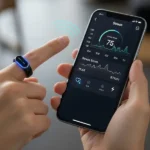
Let’s be real. When smart rings first hit the market, I was skeptical. They looked cool, yes, but could this little band of metal actually tell me anything meaningful about my body? Specifically, I was obsessed with Smart Ring VO2 Max.
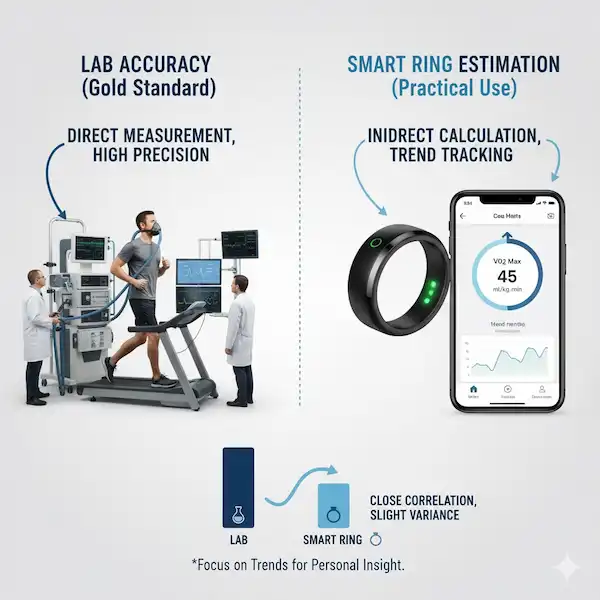
For those who don’t live and breathe fitness metrics (which, let’s face it, is most of us), VO2 max is basically the ultimate measure of how fit your heart and lungs are. It’s the engine size of your body. A higher number means you can pump more oxygen to your muscles, making those long runs, bike rides, or even just climbing three flights of stairs feel easier. I’d always heard that the only way to get an accurate reading was strapping on a face mask and running until you vomit in a science lab—the gold standard. Expensive, messy, and frankly, a bit terrifying.
So, when my smart ring promised a VO2 max estimate right on my phone, I figured, “Challenge accepted.”
The Lab vs. My Finger: A Personal Showdown
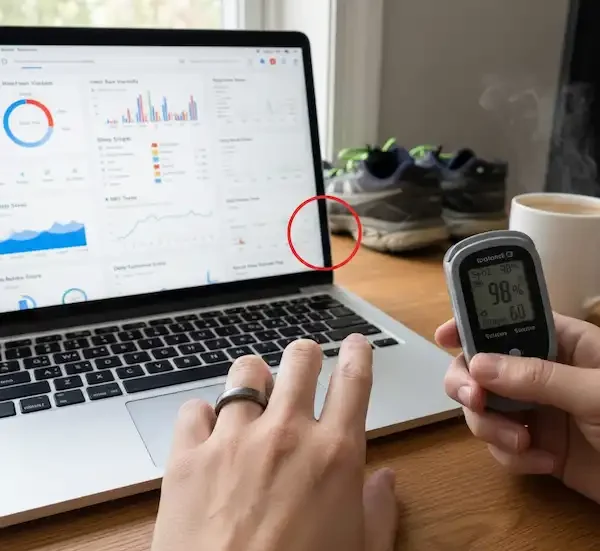
I’ll admit, the first thing I did after getting my ring was compare its VO2 max number to the last lab test I did a couple of years ago.
My Lab VO2 Max (2022): 48 ml/kg/min
My Smart Ring Initial Reading (Month 1): 44 ml/kg/min
A four-point difference! My immediate reaction was disappointment. “See? Just a guess,” I grumbled to my wife.
But then, I remembered the cardinal rule of all wearable technology: it’s not about the absolute number; it’s about the trend. That’s where the smart ring actually shines, and where its estimation becomes incredibly valuable.
An Anecdotal Example: Training for the Half Marathon
I spent three months training for a half marathon. My goal wasn’t just to finish, but to genuinely improve my cardiorespiratory health. I wore the smart ring religiously, ensuring a snug fit (seriously, if it spins, the heart rate readings are garbage).
Here’s what my ring showed me:
| Month | Training Volume | Smart Ring VO2 Max Estimate | How I Felt |
| 1 | Low (3 runs/wk) | 44 ml/kg/min | Sluggish, frequent skipped runs |
| 2 | Medium (4 runs/wk) | 46 ml/kg/min | Noticeable improvement; Hill repeats felt easier |
| 3 | High (5 runs/wk) | 48 ml/kg/min | Strong, recovered faster, felt “in the zone” |
The Revelation: Even though the initial reading was “off” compared to the lab, the ring perfectly reflected my real-world fitness gains. My effort level dropped for the same pace, my resting heart rate lowered, and most importantly, the estimated VO2 max climbed steadily by 4 points—a significant jump that validated all the hard work I was putting in.
Key Takeaway: The smart ring didn’t give me a perfect scientific truth, but it gave me a consistent and motivating benchmark. It was the compass, not the GPS satellite.
This method provides a highly accurate and precise measurement of your actual maximal oxygen uptake.

How Does the Magic (Estimation) Actually Work?
My Smart Ring VO2 Max isn’t breathing into a mask. So, how does it pull this number out of thin air?
It comes down to connecting three dots that are all tracked from the convenience of your finger:
- Your Heart Rate Response: During a recorded run or walk, the ring watches how fast your heart rate climbs under strain and, more crucially, how quickly it drops during recovery. A fitter heart handles both acceleration and deceleration better.
- Your Activity Intensity: The accelerometers know exactly how fast you’re moving and for how long. The algorithm links your movement intensity to your heart rate.
- Your Personal Data: It combines this real-time data with static info you entered: my age (40s), my weight (staying honest!), and my gender. These factors are used in established equations (like the famous Cooper or Tanaka equations, but usually a much more complicated proprietary version) to produce the estimate.
If the ring’s optical sensor (PPG) gets shaky data during a workout (e.g., if it’s too loose), the VO2 max estimate suffers. I learned this the hard way after a muddy mountain bike ride where my finger swelled and the reading plummeted. Lesson learned: fit matters most!
Making Your Smart Ring an Honest Fitness Coach
If you want your smart ring to be more than just a fancy sleep tracker, follow these personal tips to maximize the usefulness of its Smart Ring VO2 Max estimate:
- Be a Data Scientist (for 5 minutes): Make sure your height, weight, and age are updated the moment you lose those few pounds or celebrate a birthday. The formula relies heavily on these static inputs.
- Give It Something to Chew On: My ring really needed a good, sustained cardio effort—at least a 10-minute run or brisk walk—to get a reliable reading. That 5-minute dash to catch the bus doesn’t count.
- Ignore the Daily Noise: Your VO2 max estimate might wobble slightly day-to-day based on stress or sleep quality. Don’t sweat it. Review the reading weekly or monthly. A three-month rising slope is a victory; a one-day drop is just Tuesday.
- Mind the Weather: I noticed my reading dipped slightly during extremely hot, humid runs. Heat stresses the heart and makes it work harder, which can trick the ring’s algorithm into thinking you’re less efficient. Don’t worry, it’s just the humidity talking.
The Verdict: Is the Ring Accurate?
If “accurate” means “exactly matching the highly calibrated machine in the science lab,” then no, probably not. It might be off by a few points.
But if “accurate” means “giving me reliable, consistent, and actionable feedback that motivates me and accurately reflects the hard-earned improvements in my fitness,” then absolutely, yes.
The smart ring’s true power is its ability to make an expensive, intimidating lab metric accessible every single day. It turned an abstract concept into a personal score I could train against. And for me, that motivation has been priceless.
Real-World Examples and Case Studies
While direct scientific studies specifically on smart ring VO2 max accuracy are still emerging, we can draw parallels from similar wearable technology.
Example 1: The Oura Ring and Readiness Score
The Oura Ring, a popular smart ring, doesn’t provide a direct “VO2 max” number in the same way some smartwatches do. Instead, it focuses on a holistic “Readiness Score” that incorporates heart rate variability, body temperature, activity, and sleep. While not a direct VO2 max, these metrics are all highly correlated with cardiovascular fitness and recovery, which indirectly reflects one’s overall aerobic capacity. Oura’s strength lies in tracking trends and helping users understand their body’s response to training.
Example 2: Comparing with Smartwatches
Many smartwatches (e.g., Apple Watch, Garmin, Fitbit) provide VO2 max estimations. Studies comparing these smartwatches to lab tests have shown that:
- General Correlation: Wearables often show a moderate to strong correlation with lab-measured VO2 max. This means that if your lab VO2 max is high, your wearable will likely also report a higher value.
- Absolute Value Discrepancies: The absolute VO2 max number reported by a wearable can differ from the lab measurement, sometimes by a significant margin (e.g., 5-15%).
- Trend Tracking Strength: Where wearables excel is in tracking changes over time. If your smart ring’s estimated VO2 max consistently increases, it’s a good indicator that your fitness is improving, even if the absolute number isn’t perfectly accurate.
This table illustrates a hypothetical comparison between lab and smart ring VO2 max readings for different individuals:
| Individual | Lab VO2 Max (ml/kg/min) | Smart Ring VO2 Max (ml/kg/min) | Difference | Insight |
| A | 45 | 42 | -3 | Good correlation, slight underestimation |
| B | 52 | 55 | +3 | Good correlation, slight overestimation |
| C | 38 | 35 | -3 | Consistent underestimation |
| D | 49 | 48 | -1 | Very close estimation |
This is a simplified example. Actual differences can vary widely.
Chart: Hypothetical Smart Ring VO2 Max Trend Over Time
Imagine a user consistently training over 3 months. The smart ring might show a trend like this:
VO2 Max Trend (Smart Ring Estimation)

Month 1: 38 ml/kg/min
Month 2: 40 ml/kg/min
Month 3: 42 ml/kg/min
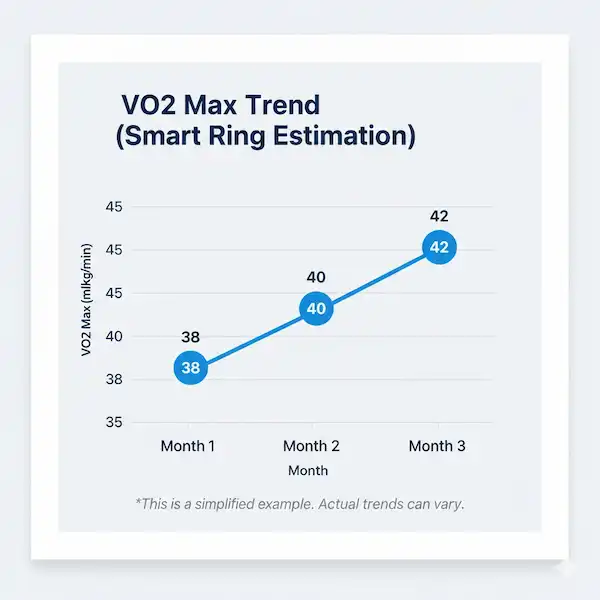
This consistent upward trend, regardless of the absolute number’s slight deviation from a lab test, indicates a real improvement in cardiovascular fitness.
Maximizing the Accuracy and Usefulness of Your Smart Ring’s VO2 Max Estimates
To get the most reliable and useful insights from your smart ring’s VO2 max tracking:
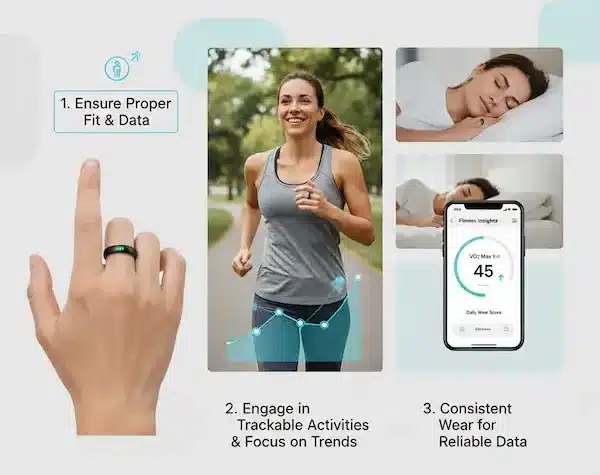
- Ensure Proper Fit: A snug but comfortable fit is crucial for accurate heart rate readings, especially during exercise.
- Keep Personal Data Updated: Make sure your age, weight, height, and sex are correctly entered and updated in the app.
- Engage in Trackable Activities: Regularly perform activities that involve sustained cardiovascular effort (e.g., brisk walking, running, cycling) that the ring can effectively monitor.
- Wear Consistently: Consistent daily wear, especially during sleep and exercise, provides the algorithm with more data for better estimations.
- Focus on Trends, Not Just Absolute Numbers: Don’t get fixated on the exact VO2 max number. Instead, pay attention to whether the number is increasing, decreasing, or staying stable over weeks and months. This reveals your fitness trajectory.
- Understand Your Ring’s Algorithm: Some rings might require specific types of workouts for VO2 max estimation (e.g., outdoor runs with GPS). Refer to your specific device’s instructions.
Additional Helpful Content: How to Improve Your VO2 Max
Regardless of how you track it, improving your VO2 max has significant health benefits. Here are key strategies:
- High-Intensity Interval Training (HIIT): Short bursts of intense exercise followed by brief recovery periods are highly effective.
- Threshold Training: Sustained efforts at a challenging but manageable intensity (your anaerobic threshold).
- Long, Slow Distance (LSD) Training: Builds your aerobic base and endurance.
- Consistent Aerobic Activity: Aim for at least 150 minutes of moderate-intensity or 75 minutes of vigorous-intensity aerobic activity per week.
- Strength Training: Improves muscle efficiency and overall power, indirectly supporting cardiovascular performance.
- Healthy Lifestyle: Adequate sleep, good nutrition, and stress management all contribute to better overall fitness and recovery.
Let’s be real. When smart rings first hit the market, I was skeptical. They looked cool, yes, but could this little band of metal actually tell me anything meaningful about my body? Specifically, I was obsessed with VO2 max.
For those who don’t live and breathe fitness metrics (which, let’s face it, is most of us), VO2 max is basically the ultimate measure of how fit your heart and lungs are. It’s the engine size of your body. A higher number means you can pump more oxygen to your muscles, making those long runs, bike rides, or even just climbing three flights of stairs feel easier. I’d always heard that the only way to get an accurate reading was strapping on a face mask and running until you vomit in a science lab—the gold standard. Expensive, messy, and frankly, a bit terrifying.
So, when my smart ring promised a VO2 max estimate right on my phone, I figured, “Challenge accepted.”
Smart Ring VO2 Max offer a convenient and increasingly sophisticated way to monitor various health and fitness metrics, including an estimated VO2 max. While they don’t replace the precision of laboratory testing, their ability to track trends and provide actionable insights makes them a valuable tool for anyone looking to understand and improve their cardiovascular fitness over time. By understanding their limitations and optimizing their use, you can harness the power of your smart ring to embark on a more informed fitness journey.
FAQ
Q: Why does my VO2 max estimate only change after a run, not just a walk?
A: Smart rings often require an activity that truly pushes your cardiovascular system close to its maximal effort to get a strong reading. A gentle walk doesn’t stress your system enough for the algorithm to determine your true maximum capacity.
Q: I use two different wearables (ring and watch). They give different numbers! Which is right?
A: Neither is “right,” but both are likely “consistent.” Because they use different internal math (proprietary algorithms), they will naturally give different absolute numbers. Pick one device and stick with it for long-term trend tracking. That consistency is the key to measuring your progress.
Q: Can stress or bad sleep affect my VO2 max reading?
A: Indirectly, yes. Poor sleep and high stress lead to higher resting heart rates and lower heart rate variability (HRV). Since these metrics are key inputs for the VO2 max calculation, the ring might read a slightly lower score, accurately reflecting that your body is currently less efficient or under strain.
Q: Is it safe for me to try to improve my VO2 max?
A: Generally, yes! Improving cardiovascular fitness is one of the best things you can do for your health. However, if you are new to high-intensity training (like HIIT) or have underlying health concerns, always consult with your doctor before starting a vigorous new exercise program.
Additional Helpful Links
More information about how smart rings monitor sleep – Smart Ring Readiness: HRV, RHR & Sleep
External Links for Authoritative Sources
- American College of Sports Medicine (ACSM): A leading authority on exercise science, offering guidelines and research on fitness assessment. https://www.acsm.org/
- National Institutes of Health (NIH) – MedlinePlus: Provides reliable information on various health topics, including cardiovascular fitness. https://medlineplus.gov/
- PubMed (National Library of Medicine): A vast database of scientific research, where you can find studies on VO2 max and wearable technology. https://pubmed.ncbi.nlm.nih.gov/