Unlock Doors with NFC Smart Ring: A Hands-On Guide to Keyless Living
I still remember the night I stood outside my apartment at 2 AM, frantically patting down my pockets for a set of keys that were currently sitting on my kitchen counter. That was the last time I let a piece of jagged metal dictate my schedule. Since then, I’ve moved into the world of wearables, specifically using a tiny circle of ceramic on my finger to handle everything from office access to my front door.
If you are looking to Unlock Doors with NFC Smart Ring setups, you aren’t just buying a gadget; you are upgrading your daily flow. But before you go out and buy the first shiny band you see on an ad, there is a lot of technical nuance—especially regarding the differences between Android and iPhone—that most manufacturers won’t tell you on their sales pages.
The Real Talk on Hardware Compatibility
The biggest mistake people make is assuming “NFC” is a single, universal language. In the security industry, we look at frequencies. Most smart rings operate on 13.56 MHz (High Frequency). This is the same frequency used by modern smartphones. However, many older apartment buildings and office complexes still use 125 kHz (Low Frequency) “proximity” cards.
If your building’s reader has a big “HID” logo on it and the cards are thick and chunky, a standard NFC ring likely won’t work out of the box. You need a ring that specifically supports dual-frequency or a lock that is built for modern NFC standards. When I started testing these, I had to replace my deadbolt with an Ultraloq or an August-style lock that explicitly supported the 13.56 MHz protocol to get that “one-tap” magic.
Android vs. iPhone: The Practical Divide
Using your ring with a phone is one thing; using it to bridge the gap to your home security is another.
The Android Experience
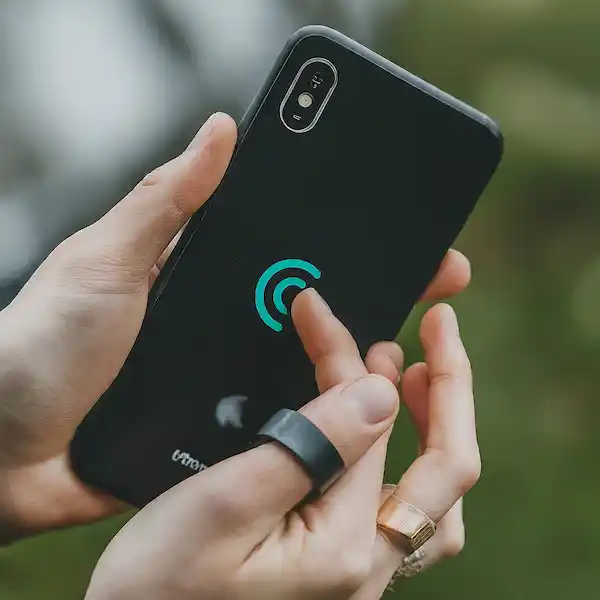
Android is generally the “Wild West” of NFC. If you have an NFC-enabled Android phone, you have almost total control over the chip in your ring. I use apps like NFC Tools to write “instructions” to my ring. For example, I can set my ring so that when I tap it against my phone, it toggles my smart home “Away Mode,” which then triggers my smart lock to engage.
On Android, the “Unlock Doors with NFC Smart Ring” process is often direct. Many locks come with a management app where you simply go to “Add Key,” tap your ring to the back of your phone, and the lock’s ecosystem now recognizes your finger as a valid credential.
The iPhone (iOS) Experience
Apple is much more protective. For a long time, the NFC chip in an iPhone was locked down tight for Apple Pay only. While Apple has opened this up with the “Shortcuts” app, you can’t exactly “clone” a secure home key to a generic ring easily due to Apple’s Secure Enclosure.
To Unlock Doors with NFC Smart Ring hardware while using an iPhone, you generally have to work within the lock manufacturer’s app. You aren’t “copying” the iPhone’s key to the ring; you are registering the ring as a separate “tag” in the lock’s database. I found that using the iOS Shortcuts app to trigger a “HomeKit” action when the ring is scanned is a clever workaround, but it requires your phone to be nearby, which kind of defeats the purpose of a standalone ring.
Insider Knowledge: The “Clone” Secret
Here is something the big brands won’t tell you: most building fobs are actually incredibly easy to duplicate if they aren’t encrypted. If you live in an apartment with a standard key fob, you can often buy a “Blue Copier” or a Proxmark3 (for the more tech-savvy) and move your fob’s ID onto a rewritable NFC ring.
I’ve done this for several friends who were tired of carrying those bulky plastic teardrop fobs. We scan the building fob, find the ID number, and write it onto a T5577 or CUID chip embedded in a ring. Suddenly, the gym, the elevator, and the front gate all open with a fist-bump to the reader. Just be careful—building management usually isn’t thrilled about “unauthorized” duplicates, even if they are more convenient.
Why Your Choice of Material Matters
I’ve worn everything from metal to wood-infused rings. If you want to Unlock Doors with NFC Smart Ring tech reliably, go with Zirconia Ceramic. Metal rings (like titanium or steel) act as a “Faraday Cage.” They block the radio signals unless the antenna is specifically designed with a gap. Ceramic is radio-transparent, meaning the signal passes through effortlessly, giving you a much better “read range.” There’s nothing more embarrassing than standing at your door for 30 seconds, rubbing your hand against the lock like you’re trying to start a fire.
Setting Up Your First Lock
If you’re starting from scratch, look for a lock that is “NFC Native.” Brands like Samsung Digital Life or Yale often have models with built-in card readers.
- Install the Lock: Follow the standard mechanical installation.
- Enter Programming Mode: Usually involves a master PIN code.
- Register the Ring: Instead of tapping a plastic “key card,” you tap your ring.
- Test the Range: Find the “sweet spot.” Every lock has an antenna coil located in a specific spot—usually near the center of the keypad or the logo.
The Reality of Daily Use
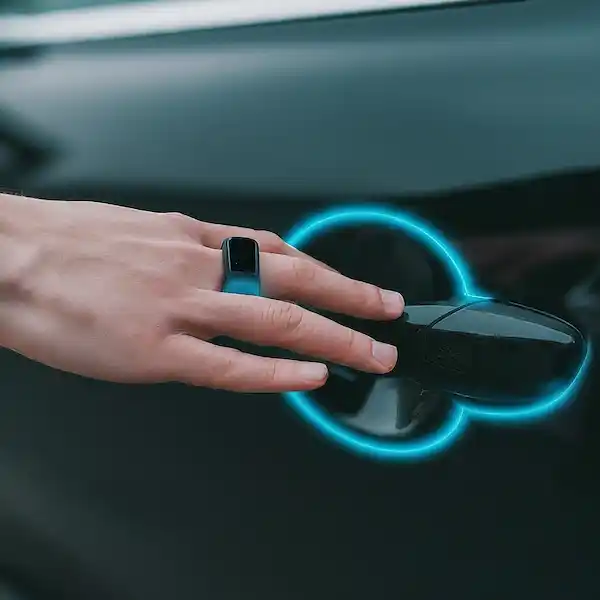
Is it perfect? No. You’ll find that different readers require different hand orientations. To Unlock Doors with NFC Smart Ring, sometimes I have to turn my palm outward; other times, a flat “knock” works best. But the freedom of going for a run without a jingle in my pocket is worth the occasional “re-tap.”
To truly Unlock Doors with NFC Smart Ring setups, you need to think of the ring as your “physical identity.” It’s not just a key; it’s a piece of you that communicates with the world. Whether you are using it to trigger an Android automation or as a registered guest on a Yale lock with your iPhone, the goal is the same: friction-less entry.
Additional Thoughts on Keyless Entry
If you’re tired of the “pocket dance” every time you get home, moving to an NFC ring is a legitimate life hack. Just remember: check your frequency, choose ceramic over metal, and don’t be afraid to experiment with the “sweet spot” on your reader. You are essentially turning your hand into a master key, and once you get used to it, you’ll never want to go back to the old way.
Frequently Asked Questions
Can I use my ring to unlock my car? Only if your car supports NFC “Key Card” entry (like Tesla or some newer BMW/Hyundai models). For most cars, you’d need to install a third-party NFC relay, which is a bit of a weekend project involving some wiring.
Is it safe? Can someone “sniff” my ring in public? Technically, someone with a high-powered reader could get close to your hand and read the ID. However, NFC has a very short range (usually less than 4cm). In the real world, the risk of someone “pickpocketing” your ring’s digital ID is much lower than someone just stealing your physical keys.
Does the ring need to be charged? Nope. Most Unlock Doors with NFC Smart Ring devices are “passive.” They draw a tiny amount of power from the reader’s electromagnetic field the moment you bring them close. They will work forever, or at least until the internal antenna gets crushed.
What happens if I lose the ring? Just like a lost credit card, you simply go into your lock’s app and delete that specific ring’s ID. The “key” becomes useless immediately. This is actually safer than a metal key, which requires you to change the entire lock if you lose it.
Will it work through gloves? Thin leather or wool gloves usually aren’t an issue. However, if you’re wearing heavy-duty winter mittens, the distance might be too great for the small antenna in the ring to wake up.
Additional helpful information:
- You can also unlock your phone with your NFC Smart Ring – Unlock Your Phone With NFC Smart Ring
- Use a smart ring for corporate authentication – Corporate Smart Ring Authentication for Modern Offices